
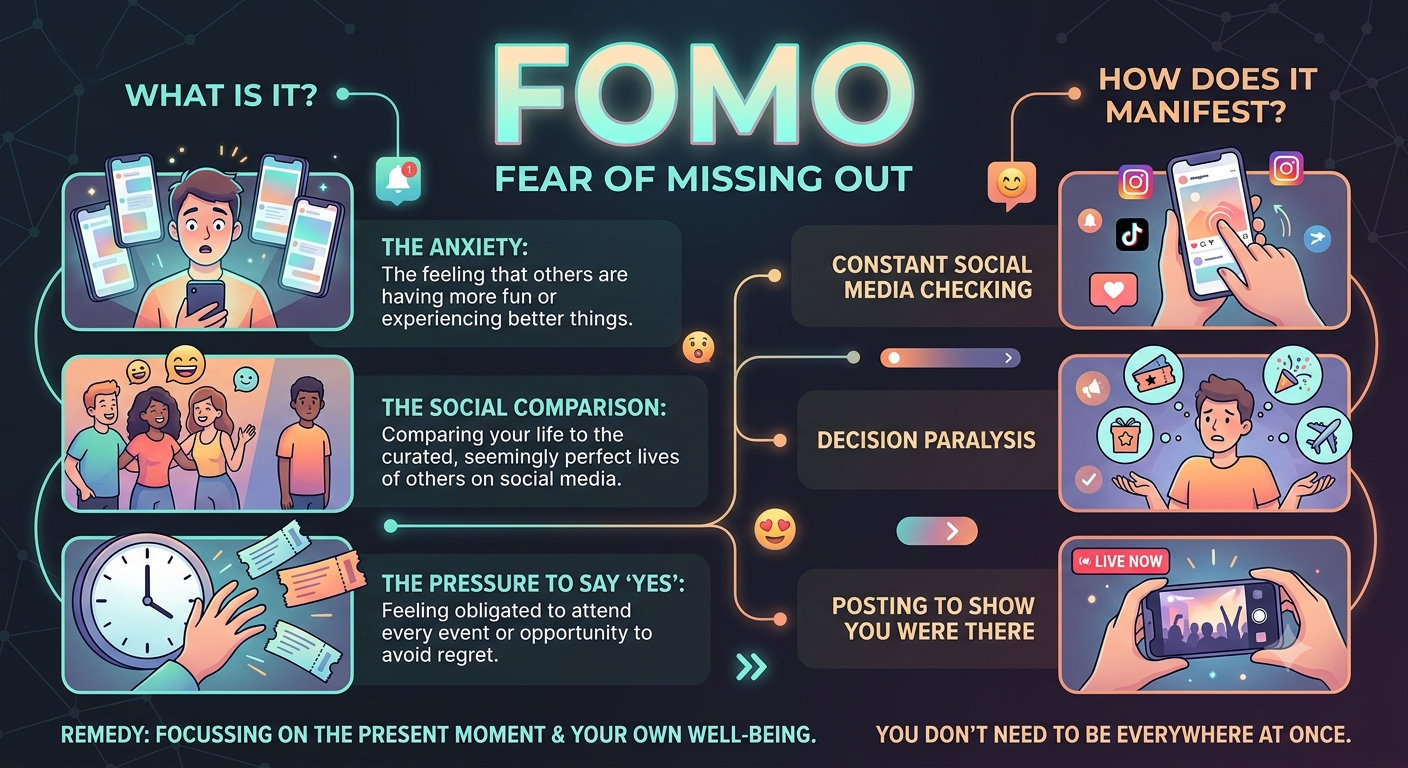
FOMO Meaning in Text: What It Really Means and How to Use It Right
You’re scrolling through a group chat and someone drops “FOMO” out of nowhere. No context. No explanation. Just three letters sitting there like everyone’s supposed to know exactly what it means.
If you’ve ever paused mid-scroll wondering what someone actually meant by it, you’re not alone. This little acronym shows up everywhere in texting slang, and it carries more emotional weight than people realize.
Why People Get Confused by FOMO Meaning in Text
The confusion usually isn’t about the letters themselves. It’s about tone.
Is your friend joking? Are they genuinely upset about missing an event? Is this FOMO slang meaning something flirty, or just casual venting about a party they skipped?
Text strips away tone of voice and facial expressions, so a word that feels obvious in person can feel murky on a screen.
What This Article Will Help You Understand
By the end of this, you’ll know exactly what FOMO means, where it came from, how it shows up across different platforms, and how to respond when someone texts it to you.
We’ll also cover the difference between FOMO and its lesser-known cousin, JOMO meaning, plus a few situations where using this word can backfire.
What Does FOMO Mean in Text?
The Simple One-Line Definition
FOMO stands for Fear of missing out — that uneasy feeling you get when it seems like everyone else is having fun without you.
It’s short, it’s punchy, and it fits perfectly into fast-paced chat abbreviations culture where nobody has time to type full sentences.
Does FOMO Always Mean the Same Thing?
Not exactly. Context changes everything.
Sometimes it’s lighthearted, like a friend joking about missing pizza night. Other times it points to something deeper, like social media anxiety or genuine feeling excluded from a friend group.
It can also show up in completely different settings, like crypto FOMO or investing FOMO, where people rush into decisions because they’re scared of missing a financial opportunity. Same word, very different stakes.
Origin of FOMO Slang
FOMO isn’t as new as people assume. The origin of FOMO actually traces back to marketing and business research long before it became a texting staple.
Harvard Business School graduate Patrick McGinnis FOMO is often credited as who coined FOMO back in 2004, using it in a magazine column about social anxiety among his classmates. The history of FOMO shows it slowly crept from academic and business talk into everyday slang over the following decade.
Which Platforms Made It Popular?
Social apps took this word and ran with it. FOMO meaning in Instagram captions became common as people posted about events, vacations, or parties they didn’t want to miss.
FOMO meaning in TikTok videos often shows up as a joke format, where creators poke fun at people rushing to try a trend before it’s “over.” Meanwhile, FOMO meaning in Snapchat stories usually reflects real-time envy, since Snapchat is built around fleeting, in-the-moment content.
Even FOMO meaning in WhatsApp chats has become common, especially in group settings where someone shares photos from an outing others weren’t part of.
Who Uses FOMO the Most?
Younger users dominate this space. Gen Z slang and teen slang words both lean heavily on FOMO because it captures a very real, very common feeling in a single word.
It fits perfectly into online messaging culture, where brevity matters and emotional shorthand keeps conversations moving fast.
FOMO vs Similar Slang Terms
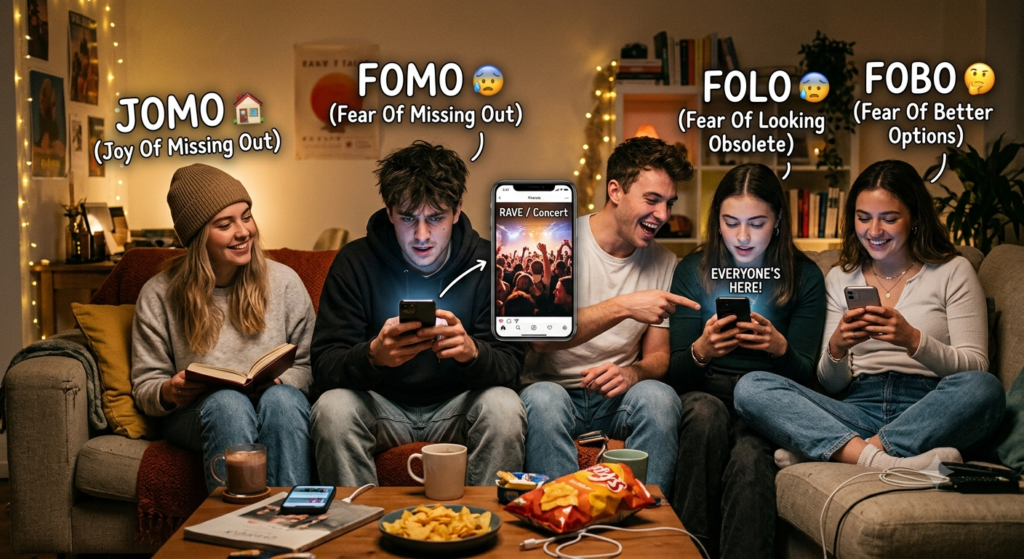
FOMO doesn’t exist in isolation. It sits alongside a handful of other popular acronyms that often get mixed up.
Quick Comparison Table
Here’s a simple breakdown showing how FOMO compares to some commonly confused terms.
| Term | Full Meaning | Typical Use | Emotional Tone |
|---|---|---|---|
| FOMO | Fear of missing out | Feeling left out of an event or trend | Anxious, envious |
| JOMO | Joy of missing out | Choosing to skip something and feeling good about it | Relaxed, content |
| YOLO | You only live once | Justifying a spontaneous decision | Bold, carefree |
| TMI | Too much information | Reacting to oversharing | Awkward, blunt |
Key Differences Explained
FOMO psychology centers around anxiety and comparison, while joy of missing out flips that entirely. Instead of stressing about what you’re missing, JOMO celebrates the peace of staying home.
YOLO meaning is more about justifying action, not avoiding regret. And TMI meaning has nothing to do with missing out at all, it’s purely about oversharing personal details.
Understanding these differences helps you use each term correctly instead of tossing them around interchangeably.
Real Conversation Examples of FOMO

Seeing FOMO in action makes the meaning click faster than any definition.
Between Friends
Friend 1: “We’re all going to the beach tomorrow, you in?” Friend 2: “Can’t, working. Already feeling the FOMO though.”
This is casual and low stakes. It’s just an honest reaction to missing a hangout.
In a Flirty Context
Person A: “Wish you were here, this rooftop view is unreal 🌆” Person B: “Okay major FOMO right now. Save me a spot next time?”
Here it carries a flirty undertone, almost like an invitation for future plans together.
In a Group Chat
Group Chat Message: “Guys the concert was INSANE last night 🎤🔥” Reply: “Not you guys giving me FOMO for something I didn’t even know was happening 😭”
Group chats often amplify FOMO because everyone sees the fun happening in real time.
Is FOMO Rude, Polite, or Flirty?
FOMO itself isn’t inherently rude. It’s more about how and when it’s used.
When It Feels Friendly
Most of the time, saying you have FOMO is just an honest, relatable reaction. It shows you care about being included and enjoy spending time with people.
It’s a light way to express feeling left out without sounding dramatic or accusatory.
When It Can Feel Too Forward
Occasionally, someone might overuse it to guilt-trip friends into inviting them everywhere. This can come across as peer pressure disguised as a joke.
If it starts feeling manipulative rather than playful, that’s usually a sign the tone has shifted.
How to Respond to FOMO
Knowing how to reply to FOMO texts keeps conversations natural instead of awkward.
Simple Replies
- “Aw, next time for sure!”
- “You didn’t miss much, promise.”
- “We’ll plan something soon just for you.”
These keep things warm without overexplaining.
Playful Replies
- “FOMO is temporary, memories are forever 😌”
- “Should’ve come, now you owe me a coffee.”
- “This is your sign to say yes next time.”
Playful responses work especially well in group chats or flirty conversations.
When NOT to Use FOMO
FOMO isn’t always the right word to reach for.
Avoid using it in serious emotional conversations where someone is dealing with real feeling excluded issues tied to mental health and social media struggles. In these moments, the word can feel dismissive instead of comforting.
It’s also worth avoiding in professional settings, since it can come across as unprofessional or overly casual depending on the context.
And be careful using FOMO-driven language in sales pitches to friends or family, since urgency in sales tactics can feel manipulative outside of actual marketing contexts.
FAQ
What does FOMO mean in a text message?
FOMO means Fear of missing out, describing the anxious feeling of missing something fun or important that others are experiencing.
Is FOMO good or bad?
It depends on context. Occasional FOMO is normal, but constant FOMO tied to social media anxiety can affect self-esteem and mental wellbeing.
What’s the opposite of FOMO?
The FOMO opposite is JOMO, or joy of missing out, which reflects contentment with skipping social events.
How do I stop feeling FOMO all the time?
Limiting missing out on social media exposure, focusing on your own plans, and practicing JOMO meaning habits can help reduce constant comparison.
Is FOMO used in marketing too?
Yes, FOMO marketing is extremely common. Brands use limited-time offers and countdowns to trigger urgency, similar to how FOMO in investing and crypto FOMO push people toward quick decisions.
Conclusion
FOMO might be a small acronym, but it captures a very real emotional experience shaped heavily by online culture and constant connectivity.
Whether you’re texting a friend, scrolling through TikTok trends, or reacting to someone’s Instagram captions, understanding this word helps you communicate more clearly and respond with the right tone.
At its core, FOMO is just a modern way of expressing an old feeling, wanting to belong and not miss out on shared moments with people you care about.
If you found this helpful, you might also enjoy exploring the meaning behind JOMO and how it’s slowly becoming the healthier alternative to FOMO in everyday conversations.
One Comment