
What Happen or What Happened: The Real Meaning Behind This Texting Phrase
You’re scrolling through a chat and someone drops “what happen” instead of “what happened.” No punctuation, no capital letters, just three words that somehow carry a whole mood.
If you’ve ever paused and wondered whether that’s a typo or something more, you’re not alone. This phrase shows up everywhere in casual texting language, and it doesn’t always mean what the dictionary says it should.
Why People Get Confused by What Happen or What Happened
Part of the confusion comes down to grammar. “Happen” is the base form, while “happened” is the past simple version, and English grammar rules say the second one is technically correct when asking about something that already occurred.
But texting culture doesn’t always play by those rules. People drop letters, skip auxiliary verbs, and lean on tense markers from context instead of the sentence itself. So when someone types “what happen” they’re usually not making a grammar mistake on purpose, they’re just texting fast.
What This Article Will Help You Understand
By the end of this, you’ll know the difference between the grammatically correct what happened and the shorthand version, where the slang usage came from, and how to reply depending on the vibe of the conversation.
We’ll also look at real examples so you can tell whether someone’s asking out of concern, curiosity, or flirtation.
What Does What Happen or What Happened Mean in Text?
The Simple One-Line Definition
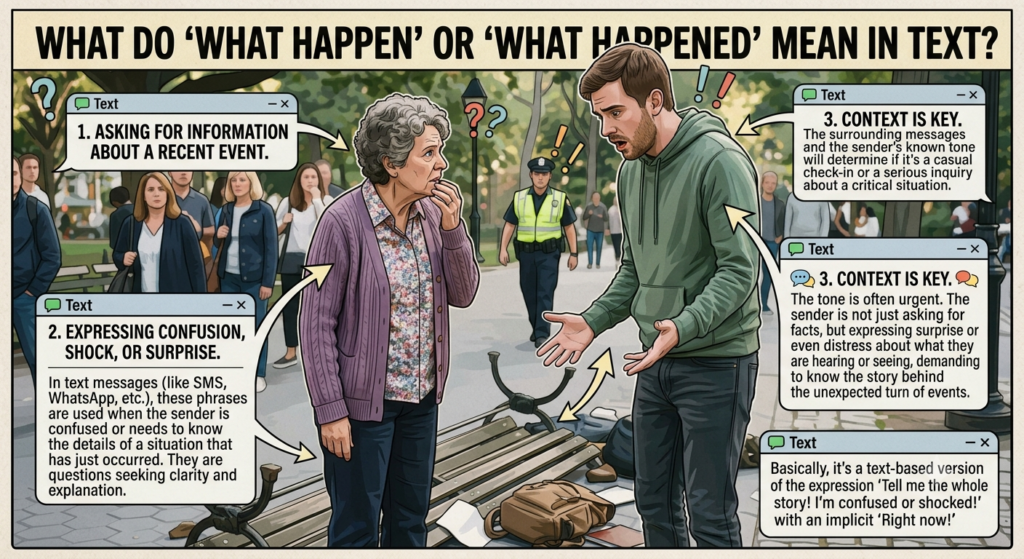
In plain terms, what happened is a subject question asking someone to explain a past event, while “what happen” is the same question written in shorthand, informal texting style.
Grammar authorities like Cambridge Dictionary and Merriam-Webster confirm that “happened” is the correct past tense of happen, and that “happen” alone describes something in the present tense or as a general truth, not a completed action.
Does What Happen or What Happened Always Mean the Same Thing?
Not exactly. Context changes everything here.
“What happened to you” usually signals concern, like someone noticed a change or an injury. “What happened last night” is more about curiosity, usually asking for details about an event. Both use has happened vs happened patterns depending on how recent the event feels to the speaker.
Meanwhile, “what happen” in informal speech or texting rarely changes meaning based on grammar. It leans entirely on tone, emojis, and the relationship between the people texting.
Origin of What Happen or What Happened Slang
Which Platforms Made It Popular?
This shorthand didn’t start in a classroom, it grew out of Snapchat Instagram slang and quick-reply culture. When you’re typing on a phone with one thumb, dropping the “-ed” saves time.
WhatsApp chat words and short form messaging habits pushed this even further, since fast replies matter more than perfect grammar in casual chats. Over time, “what happen” became its own recognizable phrase rather than just a typo.
Who Uses What Happen or What Happened the Most?
Younger texters, especially those fluent in Gen Z slang, use the shortened version most often. It fits the rhythm of digital communication, where full sentences can feel stiff or overly formal.
Older users or people writing in more formal English settings, like emails or professional messages, tend to stick with the grammatically correct “what happened.”
What Happen or What Happened vs Similar Slang Terms
Quick Comparison Table
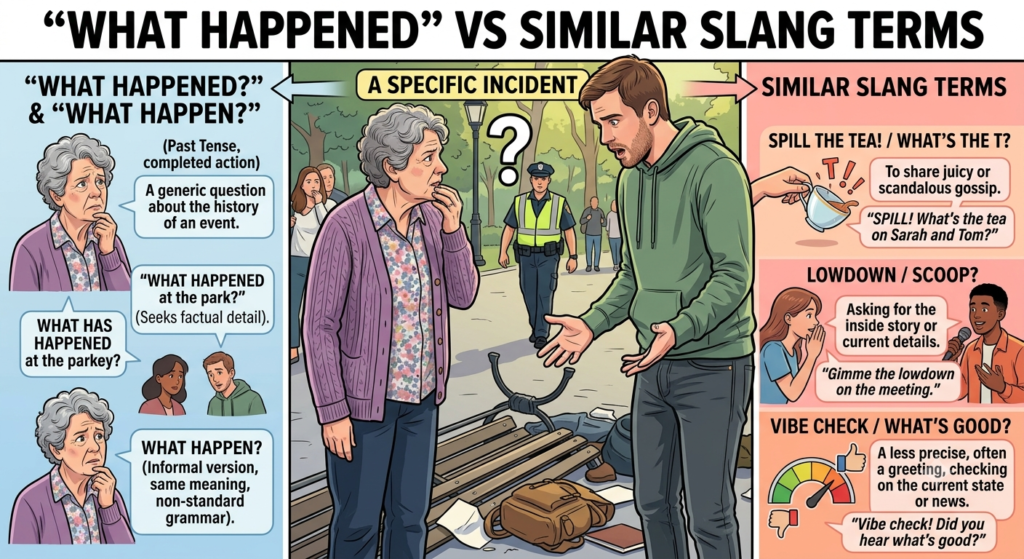
The table below shows how this phrase compares to a few similar texting expressions people often mix up.
| Phrase | Typical Tone | Grammar Status | Common Use Case |
|---|---|---|---|
| What happen | Casual, quick | Informal, not standard | Texting a friend fast |
| What happened | Neutral, direct | Correct past simple | Asking about a specific event |
| What’s good | Friendly, upbeat | Slang greeting | Checking in casually |
| What’s up | Casual, open-ended | Slang greeting | General conversation starter |
| Wyd | Very casual | Abbreviation | Asking what someone’s doing now |
Key Differences Explained
“What happen” and “what happened” ask about the past, while “what’s up” and “what’s good” are broader greetings that don’t require a specific event.
“Wyd” asks about the present moment, so it’s not really interchangeable with the others. Knowing these differences helps you avoid sending a question that doesn’t match the situation.
Real Conversation Examples of What Happen or What Happened
Between Friends
“Bro what happen to your car??” “Lol don’t ask, long story.”
This kind of exchange is light and doesn’t need perfect grammar. Friends usually understand the shorthand instantly.
In a Flirty Context
“What happen to you replying fast 👀” “Oop, my bad, got caught up thinking about you.”
Here the phrase adds a playful, teasing edge. It works well in informal speech where tone matters more than structure.
In a Group Chat
“What happen at the party last night lol” “Omg where do I even start”
Group chats tend to favor short, punchy phrasing since multiple people are replying quickly. The shorthand fits naturally here.
Is What Happen or What Happened Rude, Polite, or Flirty?
When It Feels Friendly
Most of the time, this phrase is completely neutral or even warm. Asking “what happen” usually signals genuine interest in someone’s day or situation.
It reads as casual concern rather than anything negative, especially between people who already text this way regularly.
When It Can Feel Too Forward
If someone you barely know sends “what happen 👀” out of nowhere, it can feel like they’re pushing for personal details too fast.
Tone and emojis matter a lot here. Without context, the phrase can come across as nosy rather than caring.
How to Respond to What Happen or What Happened
Simple Replies
“Nothing much, just a rough day.” “Long story, I’ll explain later.” “Oh it’s a whole thing lol.”
These keep things light without over-explaining if you’re not ready to share details.
Playful Replies
“Wouldn’t you like to know 😏” “That’s classified information for now.” “Guess you’ll have to buy me food to find out.”
These work well in flirty or friendly exchanges where the question isn’t urgent.
When NOT to Use What Happen or What Happened
Skip the shorthand version in formal English settings like work emails, job applications, or messages to teachers and professionals. In those cases, “what happened” is the safer, grammatically correct choice.
It’s also worth avoiding in serious situations, like someone describing an accident or an emergency. Sticking with proper grammar shows you’re taking the moment seriously rather than texting casually.
FAQ
Is “what happen” grammatically correct?
No, standard English grammar requires “what happened” when asking about a completed past action. “What happen” is informal shorthand used mostly in texting.
What’s the difference between happen and happened?
“Happen” is the present tense or base form, while “happened” is the past tense of happen. Native speakers use “happened” when referring to something that already occurred.
Why do people drop the “-ed” in texting?
It’s mostly about speed and casual tone. Informal speech and fast typing often skip grammar rules that feel unnecessary in quick conversations.
Does “what happened to you” always mean something bad?
Not always. It can mean concern, but it can also just be curiosity about a change, like a new haircut or an unexpected mood shift.
How do I know if “what happen” is flirty or just casual?
Look at the context, emojis, and who’s sending it. The same words can mean completely different things depending on the relationship and tone.
Conclusion
At the end of the day, what happen or what happened comes down to context more than strict grammar. One version fits fast, casual texting, while the other belongs in situations where clarity and correctness matter more.
Once you understand the difference, you’ll never second-guess a text like this again, and you’ll know exactly how to reply no matter the tone.
If you enjoyed this breakdown, you might also like a similar guide explaining other commonly confused texting phrases and how to use them naturally in everyday conversations.