
DND Meaning in Text: What It Really Means and How to Use It
You’re scrolling through a group chat and someone types “DND, talk later.” No explanation, no context. You’re left wondering what just happened.
DND meaning in text is one of those short forms that shows up everywhere but rarely gets explained. It looks simple, but people use it in different ways depending on the platform, the mood, and even the relationship between the people texting.
This article breaks it all down in plain language, so you never have to guess again.
Why People Get Confused by DND Meaning in Text
The confusion mostly comes from overlap. DND can mean Do Not Disturb, but it’s also the shorthand for Dungeons and Dragons, a popular tabletop roleplaying game. It even shows up in military abbreviation contexts and government naming, like the Department of National Defence.
So when someone sees “DND” in a text, the meaning depends heavily on context. A gamer friend typing DND probably means something very different from a coworker typing it during work hours.
What This Article Will Help You Understand
By the end of this piece, you’ll know the exact meaning of DND in texting slang, where it came from, how it’s used across WhatsApp status, Instagram bio, and TikTok comments, and how to reply when someone sends it to you.
We’ll also cover when DND feels polite, when it feels a little rude, and how it compares to similar chat abbreviation terms like BRB and AFK.
What Does DND Meaning in Text Mean?

At its core, DND stands for Do Not Disturb. It’s a quick way of telling someone you’re unavailable, busy, or need some quiet time without typing out a full sentence.
It’s one of the most common pieces of messaging shorthand used across phones, apps, and even physical hotel doors.
The Simple One-Line Definition
DND means “please don’t contact me right now” or “I’m currently unavailable.”
That’s the whole idea. It’s a boundary-setting word, not a mysterious code. People use it to protect their time, their focus, or their peace of mind.
Does DND Always Mean the Same Thing?
Not exactly. The core meaning stays close to Do Not Disturb, but the tone shifts depending on where it’s used.
On a phone, DND mode silences calls and notification settings automatically. In a text, it might just mean “I’m busy, don’t expect a fast reply.” In a gaming group, DND almost always refers to Dungeons and Dragons instead.
Context is everything here. The same three letters can mean silence, absence, or a weekend dice game.
Origin of DND Slang
The phrase “Do Not Disturb” has been around for over a century, originally used on hotel door signs. It made the natural jump to phones once smartphone settings started offering silent mode and call-blocking features.
As texting culture grew, people shortened it the same way they shortened everything else. Instead of typing “do not disturb,” DND became the go-to texting slang version.
Telecom services also played a role. Many mobile carriers offered a literal DND mode or call blocking service years before smartphones had built-in focus mode options. That practical, everyday use helped cement DND as common vocabulary.
Which Platforms Made It Popular?
WhatsApp status updates were one of the earliest places DND became a personal, casual phrase rather than a technical setting. People would simply write “DND” as their status when they wanted digital boundaries for a few hours.
From there, it spread to Instagram bio sections, TikTok comments, and even Snapchat streaks conversations, where users explain why they might miss a streak or go quiet for a day.
Workplace messaging tools like Slack and Microsoft Teams also normalized DND as a built-in away message feature, which pushed the term further into everyday online messaging culture.
Who Uses DND the Most?
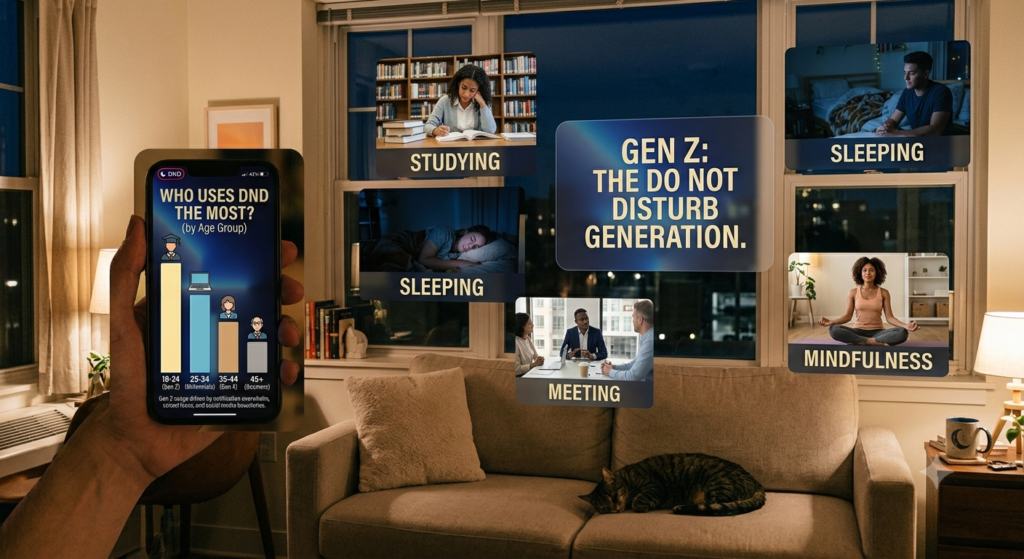
Younger users, especially those active in Gen Z slang and casual short form messaging, use DND constantly. It fits naturally into fast-paced modern internet slang.
But it’s not limited to teens. Remote workers use it to signal out of office time. Gamers use it to schedule tabletop roleplaying game sessions. Even people in meeting etiquette-heavy office jobs use DND to avoid interruptions during calls.
DND vs Similar Slang Terms
DND isn’t the only short form floating around chats. It sits alongside a small family of similar related acronyms that all deal with availability.
Quick Comparison Table
Here’s a simple breakdown showing how DND compares to other common social media abbreviations people use in daily texting.
| Abbreviation | Full Meaning | Typical Use |
|---|---|---|
| DND | Do Not Disturb | Signals unavailability or a need for quiet time |
| BRB | Be Right Back | Short, temporary pause in conversation |
| AFK | Away From Keyboard | Common in gaming, means stepping away briefly |
| OTW | On The Way | Used when heading somewhere |
| WFH | Working From Home | Explains remote work status |
| OOO | Out Of Office | Formal, often used in out of office email replies |
Key Differences Explained
The biggest difference is duration and tone. BRB and AFK are quick, casual, and temporary. You’re stepping away for a few minutes, nothing more.
DND is different because it implies a longer stretch of unavailability, often tied to focus, rest, or a mental health break. It’s less about stepping away physically and more about setting a boundary.
OOO and WFH are more formal and workplace-specific, often tied to remote work culture and calendar tools. DND, on the other hand, works everywhere — casual chats, dating apps, gaming groups, and offices alike.
Real Conversation Examples of DND
Seeing DND in action makes the meaning click faster than any definition. Here are a few everyday examples.
Between Friends
Friend 1: “Wanna call later tonight?” Friend 2: “DND till 9, cramming for an exam.”
Here, DND simply signals a temporary block of focused time, similar to a study break boundary.
In a Flirty Context
Person A: “You’ve been quiet all day 👀” Person B: “Sorry, was on DND, missed you though.”
In flirty texting, DND softens the silence. It reassures the other person that the quiet wasn’t personal.
In a Group Chat
Member 1: “Meeting moved to 3pm, everyone free?” Member 2: “Putting phone on DND during my shift, catch up after.”
This usage overlaps closely with meeting etiquette, where DND explains a temporary absence without derailing the group conversation.
Is DND Rude, Polite, or Flirty?
DND itself isn’t inherently rude. It’s actually one of the more respectful ways to explain a pause in communication, because it names the reason instead of leaving someone on read.
When It Feels Friendly
Used casually, DND feels considerate. It respects both your own personal space online and the other person’s expectations. Saying “DND for an hour” is far kinder than silence with no explanation.
It also fits naturally into screen time management habits, where people are becoming more intentional about when and how they respond to messages.
When It Can Feel Too Forward
DND can feel a little blunt if it’s used without warmth, especially early in a conversation. Sending a flat “DND” with no emoji or explanation can come across as dismissive, even if that’s not the intent.
In flirty or new conversations, tone matters more. Adding a soft explanation keeps it from feeling like a brush-off.
How to Respond to DND
Replying to DND doesn’t need to be complicated. Most responses fall into two categories: simple and playful.
Simple Replies
“No worries, talk later!” “Got it, ping me when you’re free.” “Take your time.”
These replies respect the boundary without adding pressure, which supports healthy respectful communication.
Playful Replies
“DND from me too, don’t worry 😌” “Enjoy your peace, I’ll be here.” “Noted, going full focus mode myself.”
Playful replies work especially well in flirty or friendly contexts, since they mirror the other person’s tone instead of feeling ignored.
When NOT to Use DND
DND isn’t always the right move. Avoid using it during emergencies, urgent work matters, or situations where someone genuinely needs an immediate response.
It can also backfire in new relationships if used too often without explanation, since repeated unexplained silence can feel like avoidance rather than a boundary.
Lastly, skip DND in professional emails unless you’re specifically using it in the context of out of office or calendar status tools, where the meaning is already expected and understood.
FAQ
What does DND mean in a text message?
DND means Do Not Disturb. It signals that someone is busy, unavailable, or intentionally avoiding notifications for a period of time.
Is DND the same as Dungeons and Dragons?
No, though they share the same letters. Context decides the meaning — gaming groups usually mean the tabletop roleplaying game, while texting usually means Do Not Disturb.
Is DND rude to send someone?
Not usually. It’s often seen as more respectful than silence, since it explains why you’re unavailable instead of leaving someone confused.
How do I turn on DND mode on my phone?
Most smartphones have a built-in DND mode under notification settings. You can usually access it from the quick settings menu or smartphone settings app directly.
Can DND be used in professional settings?
Yes. Many workplace tools use DND as an away message or busy status indicator, similar to OOO or WFH, especially during focused work or meetings.
Conclusion
DND meaning in text ultimately comes down to one simple idea: a short, respectful way to say “I need some space right now.” Whether it shows up in a flirty text, a busy work chat, or a gaming group, the intent stays the same — protecting time and setting boundaries.
If you found this useful, you might also enjoy a deeper look at other everyday chat abbreviations, like the meaning behind BRB, AFK, and OTW in modern texting culture.