KK Meaning in Text: What It Really Means and How to Use It
You’re texting a friend, you send over the plan for Saturday, and all you get back is “kk.” No punctuation, no extra words, just two letters sitting there. So what’s going on?
KK meaning in text is one of those tiny abbreviations that shows up everywhere but rarely gets explained. It looks simple, yet the tone behind it can shift depending on who sent it and when.
This guide breaks down everything you need to know about kk meaning, where it came from, and how to use it without sending the wrong signal.
Why People Get Confused by KK Meaning in Text
The confusion usually starts with tone. A single “kk” can read as chill and friendly, or it can feel cold and dismissive, depending on the conversation.
Some people also wonder if kk meaning changes across apps. Does it mean something different on Snapchat than it does in a work Slack message? Kind of, yes.
Add in the fact that k vs kk already trips people up, and it’s easy to see why so many people stop mid-text and think, “wait, is that rude?”
What This Article Will Help You Understand
By the end of this piece, you’ll know the real kk full form, where the slang came from, and how it’s used across different platforms like WhatsApp, Instagram, and group chats.
You’ll also get real conversation examples, comparison notes on kk vs ok and kk vs bet, and a clear answer on whether kk is rude, polite, or flirty depending on context.
What Does KK Meaning in Text Mean in Text?
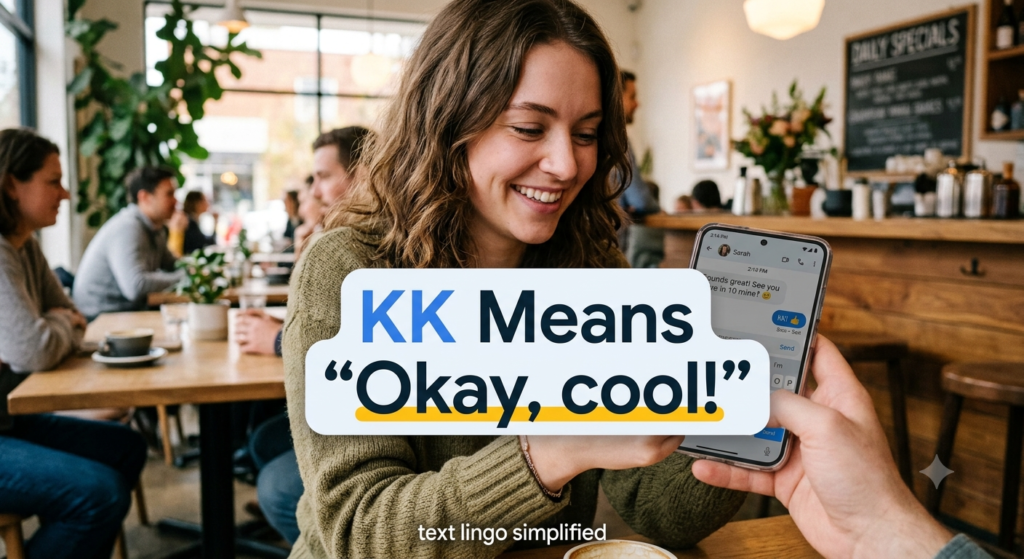
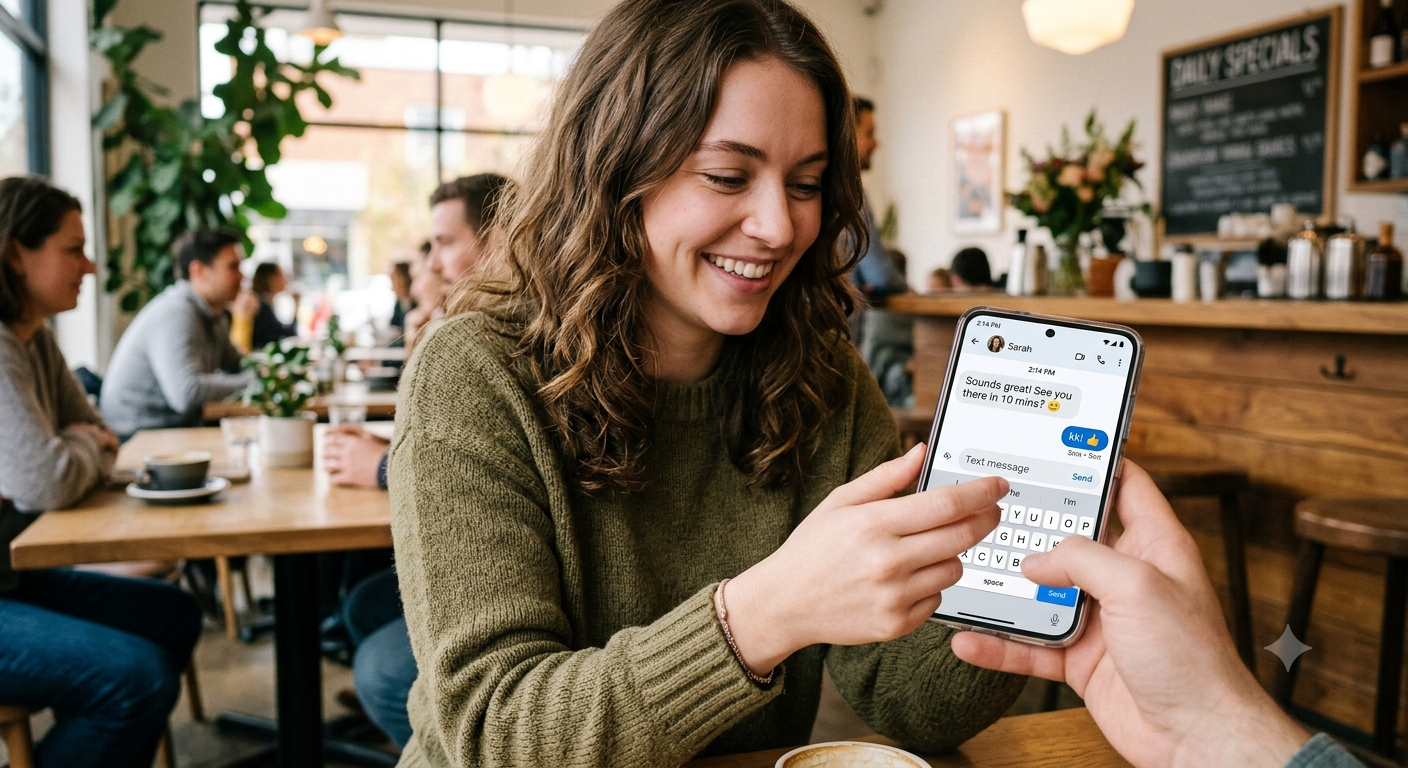
At its core, kk is a shortened, doubled-up version of “okay.” It’s an okay alright acknowledgment, nothing more mysterious than that.
Texting is fast, and typing four letters (“okay”) felt like one too many for a generation raised on texting abbreviations. So people doubled the “k” instead of dropping it entirely.
The Simple One-Line Definition
If you want the meaning of kk in text in one line: it simply means “okay, got it, understood.”
That’s really it. There’s no hidden agenda baked into the letters themselves. The kk slang meaning is agreement, confirmation, or a light acknowledgment that a message was received.
Does KK Meaning in Text Always Mean the Same Thing?
Not exactly. While the base definition stays the same, tone shifts everything.
A quick kk after making plans usually means genuine agreement. But a kk sent after an argument, or with no follow-up, can feel short and closed-off.
Context, timing, and your relationship with the sender all shape how the message lands. This is where a lot of the confusion around is kk rude or is kk sarcastic actually comes from.
Origin of KK Meaning in Text Slang
The kk origin goes back further than most people expect. Long before smartphones, gamers and early internet users were already shortening “okay” into something quicker to type.
IRC chat terms from the 1990s and early 2000s used kk as a fast acknowledgment during live conversations, especially in gaming chat slang, where every second mattered.
Players needed a way to confirm instructions without breaking focus, so “okay” became “k,” and eventually “kk” for extra emphasis or friendliness.
Which Platforms Made It Popular?
Instant messaging slang from platforms like AIM and MSN Messenger helped push kk into mainstream texting culture during the 2000s.
From there, it carried over naturally into WhatsApp slang, Instagram DM slang, and later Snapchat reply slang and TikTok comment slang as smartphones took over.
Each platform kept the same core meaning but added its own texting rhythm, which is part of the reason kk on social media feels slightly different depending on where you see it.
Who Uses KK Meaning in Text the Most?
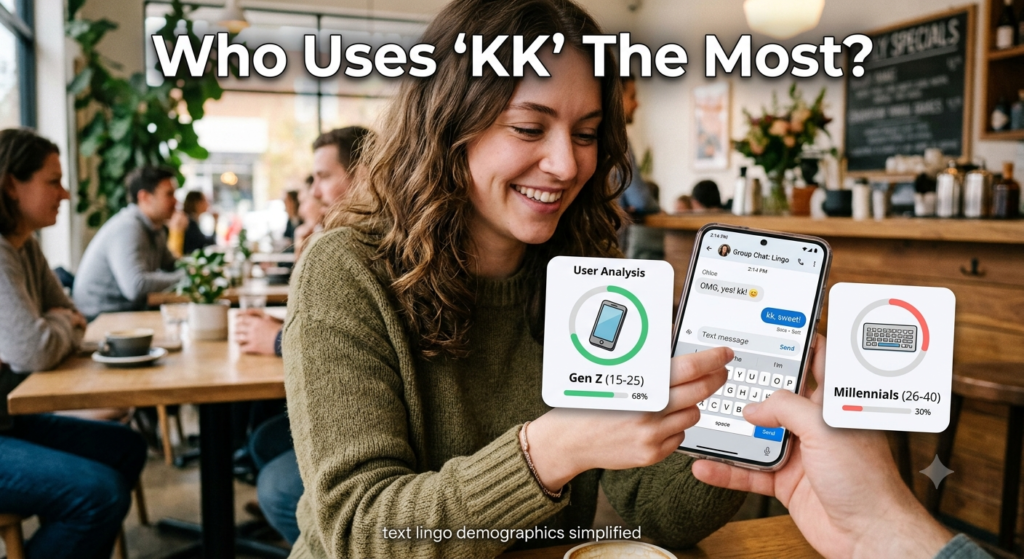
Gen Z slang usage of kk is still common, though it’s often used half-jokingly or with added flair like “kk bet” or “kk lol.”
Millennials tend to use it more as a straightforward acknowledgment, largely because they grew up with it during the instant messaging era.
Gamers across age groups also lean on it heavily, since kk meaning in gaming still functions the same way it did decades ago — a fast, no-fuss “got it.”
KK Meaning in Text vs Similar Slang Terms
There are plenty of similar-sounding replies floating around, and it helps to know how they differ from a plain kk.
Terms like k vs kk, kk vs sure, and kk vs got it all carry slightly different emotional weight, even though they technically mean the same thing.
Quick Comparison Table
The table below shows how kk stacks up against similar texting culture replies so you can see the tone differences at a glance.
| Term | Meaning | Typical Tone |
|---|---|---|
| K | Okay | Can feel blunt or cold |
| KK | Okay, got it | Friendly, casual |
| Okay | Standard confirmation | Neutral |
| Sure | Agreement, sometimes hesitant | Slightly unsure |
| Bet | Agreement, confident | Enthusiastic, Gen Z |
| Got it | Understood | Clear, professional-casual |
Key Differences Explained
A single “k” often reads as short or annoyed, even when that’s not the intent, because it feels abrupt on its own.
Kk softens that same message just by adding a letter, which is why so many people default to it in casual texting reply situations.
Kk vs bet is really a generational split — bet leans more energetic and Gen Z-coded, while kk feels more neutral and widely used across age groups.
Real Conversation Examples of KK Meaning in Text
Seeing kk in actual conversation makes the tone easier to understand than any definition alone.
Between Friends
Friend 1: “Heading out now, be there in 10.” Friend 2: “kk see you soon”
Here, kk works as a quick acknowledgment text, nothing complicated, just a fast confirmation between people who already trust each other’s tone.
In a Flirty Context
Person 1: “Save me a seat next to you tonight 😏” Person 2: “kk 😌”
In this case, the emoji does most of the flirty lifting, but the kk itself signals easy, playful agreement rather than a plain yes.
In a Group Chat
Group member: “Meeting moved to 4pm, everyone good?” Reply 1: “kk” Reply 2: “kk works” Reply 3: “kk 👍”
In group settings, kk is often used almost like a checkbox, a fast way to confirm without slowing down the conversation.
Is KK Meaning in Text Rude, Polite, or Flirty?
This is genuinely the most common question people have, and the honest answer is: it depends entirely on context.
Kk rude or friendly debates usually come down to punctuation, timing, and what was said right before it.
When It Feels Friendly
When kk follows a normal, low-stakes message — plans, reminders, quick check-ins — it almost always reads as friendly and relaxed.
Adding an emoji, a follow-up sentence, or even just a lowercase tone keeps it feeling warm rather than distant.
When It Can Feel Too Forward
If kk shows up right after someone shares something emotional or important, it can feel dismissive, even if that wasn’t the intent.
A single kk with no punctuation, sent after a longer message, is where is kk sarcastic questions usually start popping up.
How to Respond to KK Meaning in Text
Wondering what to reply when someone says kk? The good news is there’s rarely a wrong answer here.
Simple Replies
- “kk”
- “sounds good”
- “got it, thanks”
- “okay!”
These work fine for everyday, low-pressure conversations where you’re just confirming plans or information.
Playful Replies
- “kk 😌”
- “bet”
- “say less”
- “kk see you then 👀”
These fit better in flirty context exchanges or casual chats with close friends where tone is already relaxed.
When NOT to Use KK Meaning in Text
Professional settings are where kk tends to fall flat. Kk meaning in business conversations can come across as too casual, even careless, especially with clients or higher-ups.
It’s also worth avoiding after serious or emotional messages, since a bare kk can unintentionally shut down a conversation that needed more warmth.
Interestingly, kk shows up in totally different contexts outside of texting too. Kabushiki Kaisha, abbreviated as KK, is a Japanese business entity type similar to a corporation.
There’s also a kk aviation code used in specific flight and airport documentation, completely unrelated to texting slang. And in trading circles, kk meaning in finance sometimes refers to shorthand for large numeric values, though this is far less common than the texting use.
None of these apply to casual chatting, but they’re worth knowing so context doesn’t get mixed up.
FAQ
Is KK still used in 2026?
Yes, kk is still widely used, especially in casual texting, gaming, and group chats, even as newer slang terms continue to pop up alongside it.
Is KK professional?
Generally, no. It’s best kept for casual conversations, since kk meaning in business settings often calls for a more polished tone.
What is the KK full form?
There isn’t an official kk full form in texting; it’s simply a doubled shorthand for “okay,” used as a quick okay alright acknowledgment.
Is KK the same as K?
Not quite. While both mean “okay,” a single “k” often feels colder or more abrupt, while kk tends to soften the same response.
Why do people use KK instead of okay?
It’s faster to type and feels more casual, fitting naturally into fast-paced instant messaging slang and everyday chat slang.
Conclusion
At the end of the day, kk meaning in text really just comes down to a quick, friendly way of saying “okay, understood.”
The tone around it shifts with context, platform, and relationship, but the core meaning has stayed consistent since its early days in gaming and instant messaging.
Next time you see it pop up in your messages, you’ll know exactly where it came from and how to read the tone behind it.
If you found this useful, you might also enjoy a deeper look at other common texting abbreviations and what they really mean across different apps.