STFU Meaning in Text: What It Really Means and How People Use It
You’re scrolling through a group chat and someone drops “STFU” out of nowhere. Is your friend mad? Joking? About to unfollow you?
STFU Meaning in Text is one of those abbreviations that looks harsh on paper but rarely means what it seems to at first glance. It shows up everywhere, from casual texts to comment sections, and the tone behind it changes the whole message.
This article breaks down what STFU actually means, where it came from, and how to tell if someone is genuinely annoyed or just messing around.
Why People Get Confused by STFU Meaning in Text
The confusion usually comes down to tone. Text doesn’t carry inflection, so the same three letters can read as a joke from a friend or an insult from a stranger.
Someone unfamiliar with texting abbreviations might take it literally and assume they’ve upset the other person. That’s rarely the case in casual online slang meaning.
Context, relationship, and punctuation all shape how the phrase lands. A period after it feels colder than an exclamation point or a laughing emoji.
What This Article Will Help You Understand
By the end, you’ll know the core definition, the history behind it, and how it compares to similar chat acronyms.
You’ll also see real examples from different types of conversations, plus tips on how to reply without sounding awkward or overly formal.
Whether you’re new to Gen Z slang or just want a refresher, this guide covers the practical side of using and reading the phrase correctly.
What Does STFU Meaning in Text Mean in Text?
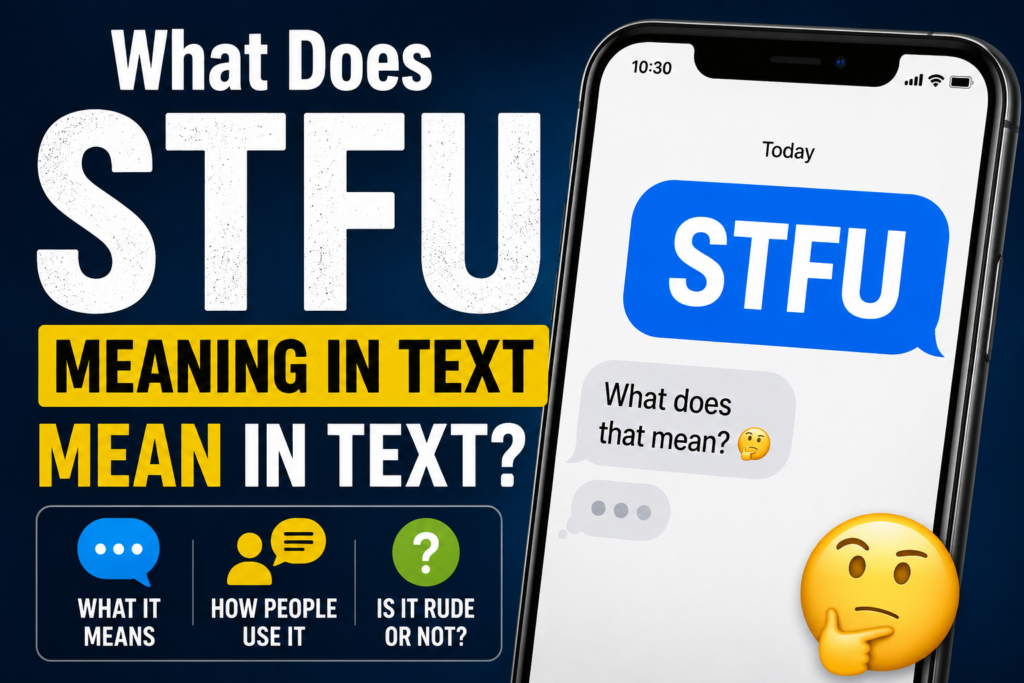
At its core, the phrase is a blunt way of telling someone to stop talking, usually because what they said was shocking, funny, or unbelievable.
It’s less about literal silence and more about an exaggerated reaction. Think of it as a dramatic verbal shove rather than an actual command.
The Simple One-Line Definition
STFU full form is “shut the f*** up,” and in casual chat it typically expresses disbelief, excitement, or mock annoyance rather than genuine hostility.
It’s part of the broader world of informal internet language, where harsh-sounding phrases get softened through repeated, playful use.
Does STFU Meaning in Text Always Mean the Same Thing?
Not even close. In STFU in chat, the phrase can mean “no way, really?” just as easily as it can mean “please stop talking.”
A friend replying “STFU” to your big news is celebrating with you. A stranger typing it in a heated comment thread is being aggressive.
The context-dependent meaning is what makes this acronym tricky for anyone new to social media slang. Reading the room, or the chat, matters more than the letters themselves.
Origin of STFU Slang
Like many abbreviations, this one didn’t start on TikTok or Instagram. Its roots go back much further than most people assume.
Which Platforms Made It Popular?
The phrase has ties to early IRC slang and AOL Instant Messenger slang culture from the late 1990s and early 2000s, when typing fast mattered more than typing nicely.
Chatrooms full of teenagers and early internet users needed short, punchy reactions, and this abbreviation fit that need perfectly.
It later carried over into forums, texting, and eventually WhatsApp slang and Instagram comments slang, adapting to each new platform’s tone.
Today it thrives in TikTok captions slang and Snapchat chat slang, often paired with emoji combinations like the crying-laughing face or a shocked expression to soften the delivery.
Who Uses STFU Meaning in Text the Most?
Both Gen Z slang and Millennial slang communities use it, though the tone shifts slightly between generations.
Millennials often grew up typing it during the AOL Instant Messenger slang era, using it mostly for genuine annoyance.
Gen Z tends to use it more for excitement or disbelief expression, especially in reaction to gossip, surprising news, or funny memes tied to meme culture.
STFU vs Similar Slang Terms
There are several acronyms that overlap with this one but carry slightly different weight. Knowing the difference helps avoid mixed signals.
Quick Comparison Table
The table below shows how this phrase stacks up against related similar acronyms in tone and common usage.
| Term | Full Meaning | Typical Tone | Common Use |
|---|---|---|---|
| STFU | Shut the f*** up | Blunt, can be playful or harsh | Disbelief, annoyance, banter |
| STFU (mild) | Shush / be quiet | Softer, joking | Friendly teasing |
| GTFO | Get the f*** out | Shock, disbelief | Reacting to surprising news |
| SMH | Shaking my head | Disappointment | Reacting to something frustrating |
| LMAO | Laughing my a** off | Amused | Reacting to something funny |
Key Differences Explained
STFU and GTFO often overlap since both express shock, but STFU leans more toward wanting someone to stop talking, while GTFO leans toward pure disbelief.
SMH is quieter disapproval without any command attached, making it a milder alternative slang option for workplace-adjacent or semi-formal chats.
LMAO carries no aggression at all, which is why it’s safer in mixed company or with people you don’t know well yet.
Real Conversation Examples of STFU Meaning in Text
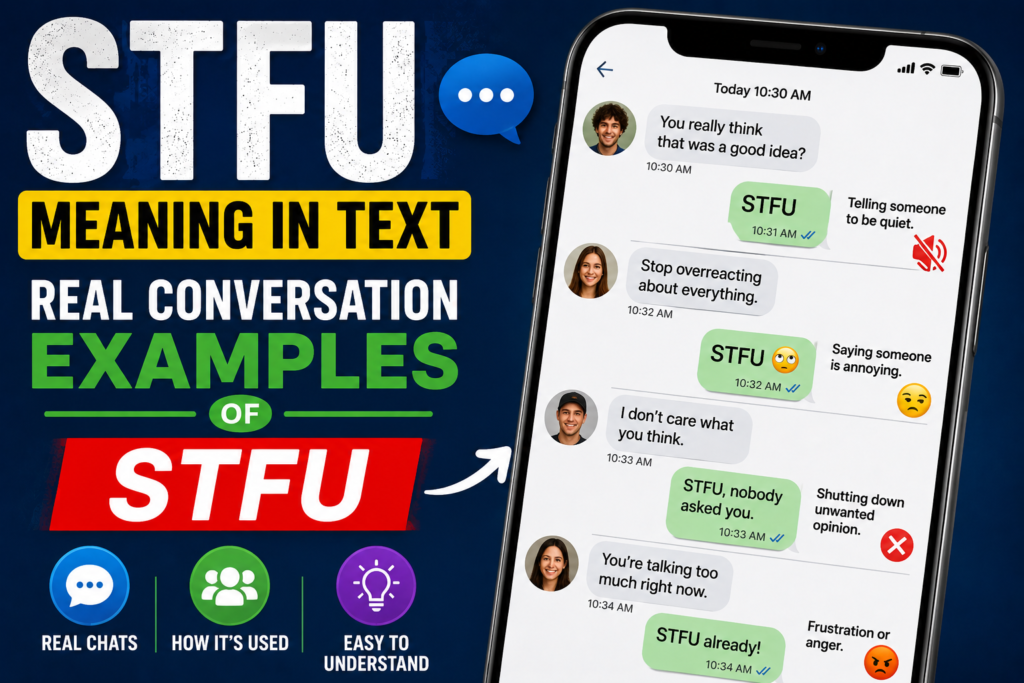
Seeing the phrase in context makes the tone much easier to read than any definition alone.
Between Friends
Friend 1: “I just got the internship!” Friend 2: “STFU, are you serious?? Congrats!!”
Here it’s pure excitement, a classic case of friend banter with zero actual anger involved.
In a Flirty Context
Person A: “I think you’re actually the funniest person I’ve talked to all week.” Person B: “Stfu 😭 you’re so sweet”
This is a humorous reply paired with mild embarrassment, common in playful teasing between people who are into each other.
In a Group Chat
Group member: “Guess who just got engaged??” Chat: “STFUUUU” Chat: “WAIT WHAT” Chat: “no way, screenshots now”
In group settings, it often becomes an online reaction phrase that spreads fast once one person sets the tone.
Is STFU Rude, Polite, or Flirty?
It can genuinely be all three, depending entirely on who’s saying it and why.
When It Feels Friendly
Among close friends, it usually functions as a sarcastic comment or exaggerated reaction rather than an actual insult.
Extra letters, emojis, or all caps (“STFUUUU”) almost always signal excitement rather than a rude interpretation.
When It Can Feel Too Forward
With someone you’ve just met, or in a professional setting, it can easily come across as a workplace messaging etiquette mistake.
Without established rapport, the phrase risks reading as genuinely hostile instead of playful, so timing and familiarity matter a lot.
How to Respond to STFU Meaning in Text
How you reply depends on whether the moment calls for something simple or something a little more fun.
Simple Replies
“Haha yeah, wild right?” works fine when someone reacts to your news with the phrase.
“I know, right?” also keeps things light without overexplaining the situation.
Playful Replies
“I know, I couldn’t believe it either” leans into the shared shock and keeps the casual digital tone going.
“Believe it 😂” works well for a playful teasing back-and-forth, especially in flirty or close-friend contexts.
When NOT to Use STFU Meaning in Text
Skip it in professional emails, client messages, or any formal digital communication where tone can’t be double-checked in person.
Avoid it with new acquaintances, older relatives, or anyone who might take informal vs formal communication boundaries seriously.
It’s also worth avoiding during genuinely tense conversations, since it can escalate an argument instead of defusing it, shifting from casual conversation slang into something that feels like offensive language online.
FAQ
What does STFU stand for exactly?
What does STFU stand for is simply “shut the f*** up.” It’s blunt by definition but often used loosely and without real anger in casual chats.
Is STFU always an insult?
No. Among friends it’s frequently a disbelief expression or excited reaction rather than a genuine insult, though tone and relationship always matter.
Can I use STFU with coworkers?
It’s best avoided in professional settings. Even as a joke, it can create a professional communication mistake that’s hard to walk back.
What’s a softer version of STFU?
Hush, zip it, or be silent work as gentler substitutes when you want the same energy without sounding harsh in text.
Why do people spell it as “stfu” in lowercase?
Lowercase softens the tone significantly. It reads as casual and friendly, while all-caps versions usually signal bigger excitement or shock.
Conclusion
STFU Meaning in Text isn’t as harsh as it looks once you understand how casually it’s used across modern chats. Most of the time, it’s excitement, disbelief, or friendly teasing rather than anything hostile.
Reading tone, punctuation, and relationship context will always tell you more than the letters themselves. Once you get comfortable with that, decoding this kind of texting shorthand becomes second nature.
If you found this useful, you might also enjoy a breakdown of other common chat acronyms like GTFO, IDK, and SMH, and how their meanings shift across different platforms and generations.