
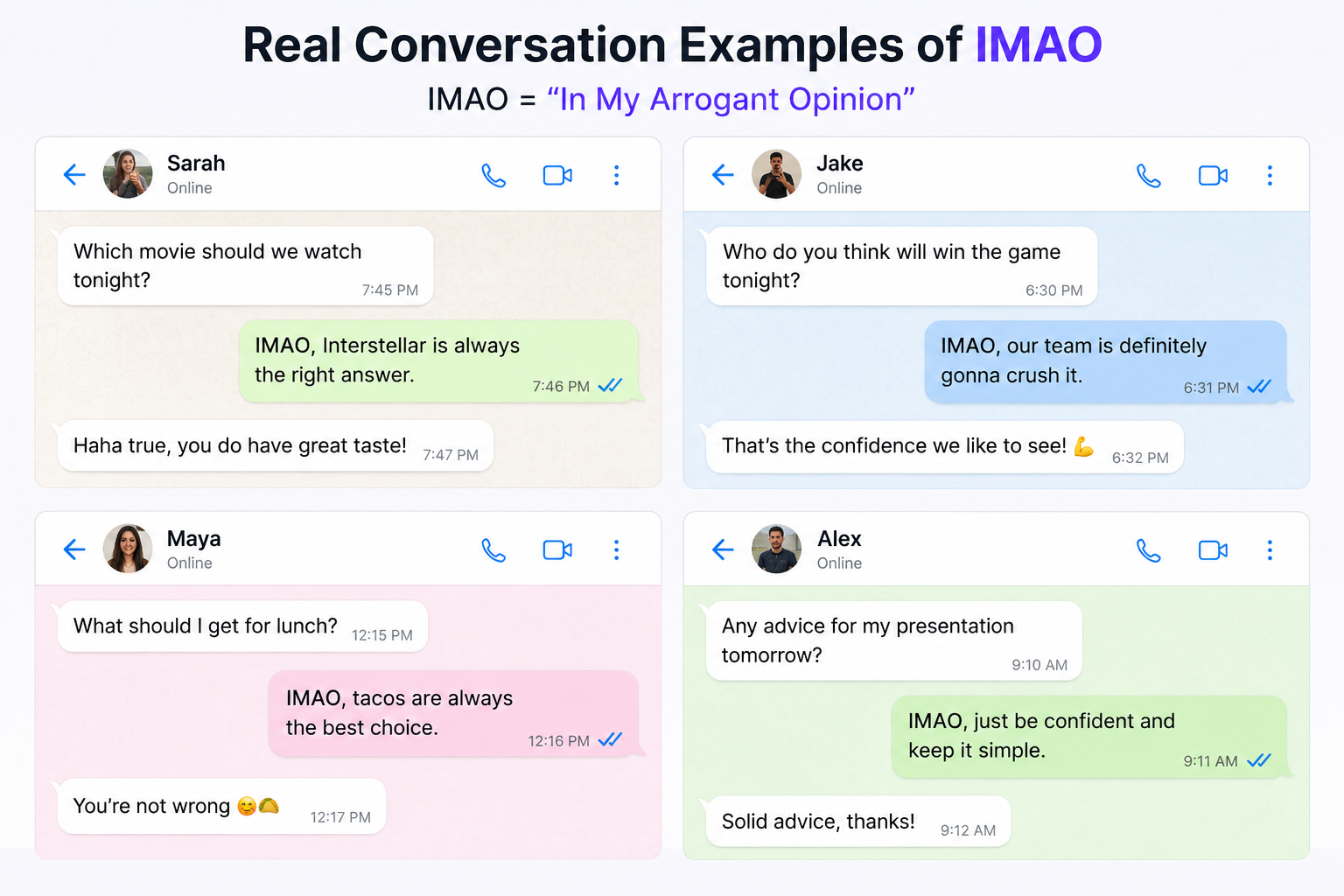
IMAO Meaning in Text: What It Really Stands For and How to Use It
If you’ve been scrolling through a group chat and someone dropped IMAO meaning in text into the middle of a sentence, you’ve probably paused for a second. It looks close to a few other acronyms you already know, but it’s not quite the same thing.
That little mix-up is more common than you’d think. Texting abbreviations move fast, and new ones pop up faster than most people can keep track of.
This article breaks down exactly what IMAO means, where it came from, and how to use it without sounding out of place.
Why People Get Confused by IMAO Meaning in Text
The confusion usually starts because IMAO looks almost identical to LMAO. One extra or missing letter, and suddenly the whole tone of a message can shift.
Add in the fact that people often use IMO vs IMHO in similar spots, and you’ve got a small pile of lookalike acronyms all fighting for the same space in a sentence.
Chat acronyms like this weren’t designed with a rulebook. They spread through casual use, which means definitions can blur depending on who’s typing.
What This Article Will Help You Understand
By the end of this, you’ll know the exact meaning of IMAO, how it differs from similar terms, and where it’s most commonly used.
You’ll also see real examples of it in conversation, learn how to reply when someone sends it to you, and understand when it’s better left unused.
Think of this as a quick, no-fluff guide to one small but genuinely useful piece of internet slang.
What Does IMAO Meaning in Text Mean?
IMAO stands for “In My Arrogant Opinion.” Sometimes people stretch it slightly to In My Absolute Opinion, but the arrogant version is the original and far more common one.
It’s basically a cheeky cousin of IMO. Instead of softly saying “in my opinion,” the person is jokingly admitting their take might be a little full of themselves.
The Simple One-Line Definition
IMAO means someone is sharing an opinion while playfully owning the fact that it sounds a bit cocky or overconfident.
It’s not meant to be taken as actual arrogance. It’s a wink, a small joke wrapped around a genuine point of view.
Does IMAO Always Mean the Same Thing?
Mostly, yes, but tone changes everything. In a serious conversation, IMAO can feel oddly dismissive, since it signals the person isn’t being fully sincere.
In a casual thread, it reads as light and self-aware, almost like the person is poking fun at their own confidence before anyone else can.
Context is really the deciding factor here, more than the acronym itself.
Origin of IMAO Slang
Like most chat room terminology, IMAO didn’t come from a single inventor or a marketing campaign. It grew out of early internet forums where people typed fast and shorthand became second nature.
It sits in the same family as LMAO, ROFL, and IMO — all born from a need to say more with fewer keystrokes.
Which Platforms Made It Popular?
IMAO first spread through early forums and instant messaging apps, back when typing speed mattered more than grammar.
It later found new life across WhatsApp chat terms, comment sections, and casual group threads. You’ll also spot it occasionally in Instagram captions slang and TikTok comments slang, though less often than its more famous cousin, LMAO.
Snapchat messages picked it up too, mostly among users who enjoy a bit of sarcastic flair in their replies.
Who Uses IMAO the Most?
It leans younger. Gen Z slang and millennial texting terms both include IMAO, though millennials were arguably the ones who kept it alive the longest from its early internet forum days.
It’s popular with people who like a playful, slightly sarcastic texting style rather than a straightforward one.
IMAO vs Similar Slang Terms
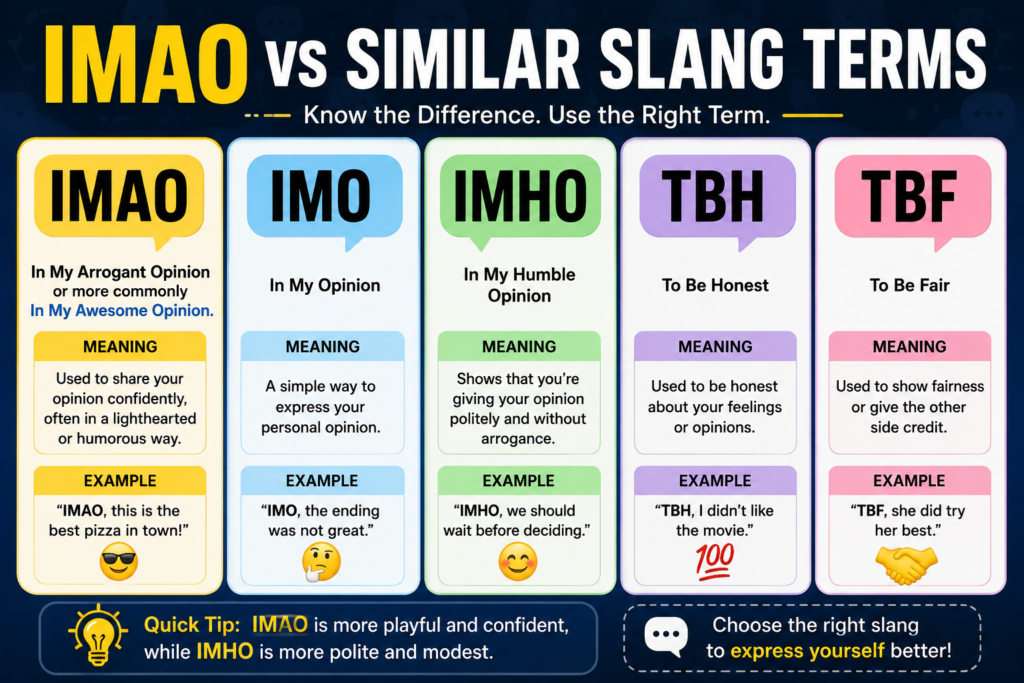
There’s a whole cluster of similar-looking acronyms, and it helps to see them side by side instead of guessing at each one individually.
Quick Comparison Table
Here’s a simple breakdown showing how IMAO compares to the acronyms people most often confuse it with.
| Acronym | Full Meaning | Tone | Common Use |
|---|---|---|---|
| IMAO | In My Arrogant Opinion | Playful, sarcastic | Joking opinions |
| LMAO | Laughing My Ass Off | Amused, reactive | Responding to something funny |
| IMO | In My Opinion | Neutral | Sharing a genuine view |
| IMHO | In My Humble Opinion | Polite, modest | Softening a strong opinion |
Key Differences Explained
LMAO meaning is all about reaction. It’s what you type after something makes you laugh, not when you’re sharing a viewpoint.
IMO and IMHO both signal a genuine opinion, but IMHO adds a layer of humility that IMO doesn’t bother with.
IMAO flips that humility on its head. Instead of sounding modest, it leans into a joking overconfidence, which is really what sets it apart from the rest.
Real Conversation Examples of IMAO
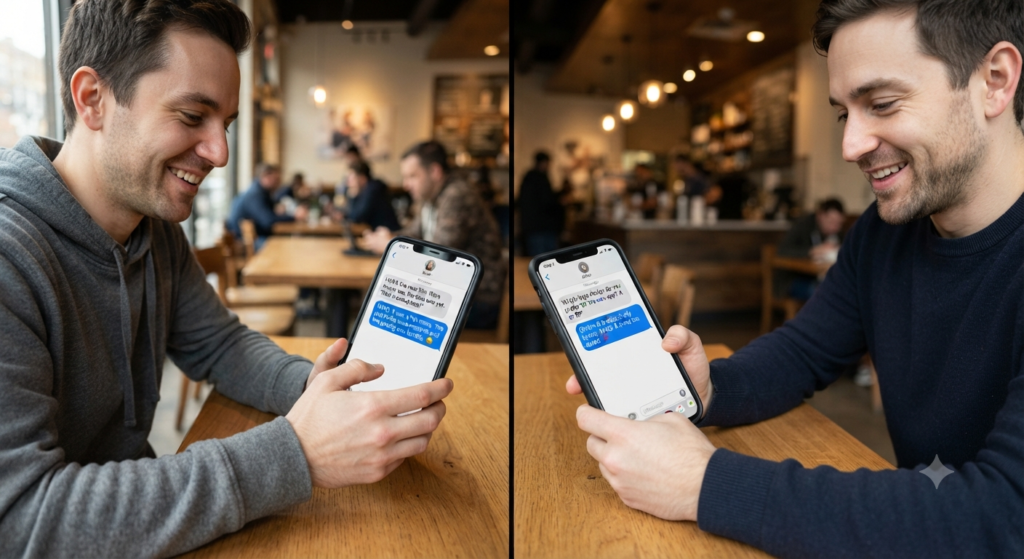
Seeing it in action makes the meaning click faster than any definition alone.
Between Friends
“IMAO, that movie was way better than the first one.”
Here, the person is stating their opinion with a playful jab at how sure they sound about it.
In a Flirty Context
“IMAO, you’re definitely the best dressed one in this chat.”
Used this way, it softens a compliment with humor, making it feel light rather than overly intense.
In a Group Chat
“IMAO, pineapple absolutely belongs on pizza, fight me.”
This is the classic setup — a debate-starter opinion, delivered with a wink instead of a lecture.
Is IMAO Rude, Polite, or Flirty?
It really depends on delivery and who’s on the other end of the conversation.
When It Feels Friendly
Among friends, IMAO almost always reads as harmless fun. It signals the person knows their opinion is a little bold and isn’t asking anyone to agree.
It works especially well in banter-heavy threads where nobody’s taking things too seriously.
When It Can Feel Too Forward
In new or more formal conversations, IMAO can come across as unnecessarily cocky, especially if the topic is sensitive.
It’s also not the best choice in professional messaging, where online chat abbreviations in general tend to feel out of place.
How to Respond to IMAO
There’s no wrong way to reply, but tone-matching usually works best.
Simple Replies
“Haha fair point.”
“I actually agree with you on that one.”
Playful Replies
“Wow, so humble.”
“IMAO right back at you, that’s a hot take.”
Matching their energy keeps the conversation flowing naturally instead of making it feel like you missed the joke.
When NOT to Use IMAO
Skip it in formal emails, workplace chats, or any conversation where clarity matters more than personality. It can easily be misread as actual arrogance rather than a joke.
It’s also worth avoiding with people who might not know the term. Digital communication works best when both sides understand the shorthand being used.
If someone’s sharing something emotional or serious, IMAO isn’t the right acronym to drop in, even as a joke.
FAQ
What does IMAO stand for?
IMAO stands for “In My Arrogant Opinion.” It’s a playful way of sharing a view while poking fun at how confident it sounds.
Is IMAO the same as LMAO?
No, they’re different. IMAO shares an opinion, while LMAO meaning relates purely to laughing at something.
Is IMAO still popular today?
It’s less common than LMAO but still shows up regularly in casual texting language, especially among people who enjoy sarcastic humor.
Can IMAO be used on Instagram or TikTok?
Yes, it appears occasionally in comments and captions, though it’s more of a texting and chat staple than a caption trend.
Is IMAO rude or polite?
Neither by default. It’s meant to be playful, but tone and context can shift how it lands, especially with people who don’t know you well.
Conclusion
IMAO meaning in text boils down to one simple idea: a playful, slightly cocky way of sharing an opinion without taking yourself too seriously.
It’s not as widely used as LMAO, but it still has a solid place in casual texting culture, especially in group chats and banter-filled conversations.
Once you know the difference between IMAO, IMO, and IMHO, you’ll never second-guess which one fits your message again.
If you enjoyed this breakdown, you might also like a guide comparing the most common laughing acronyms people use across texting and social media today.


2 Comments