
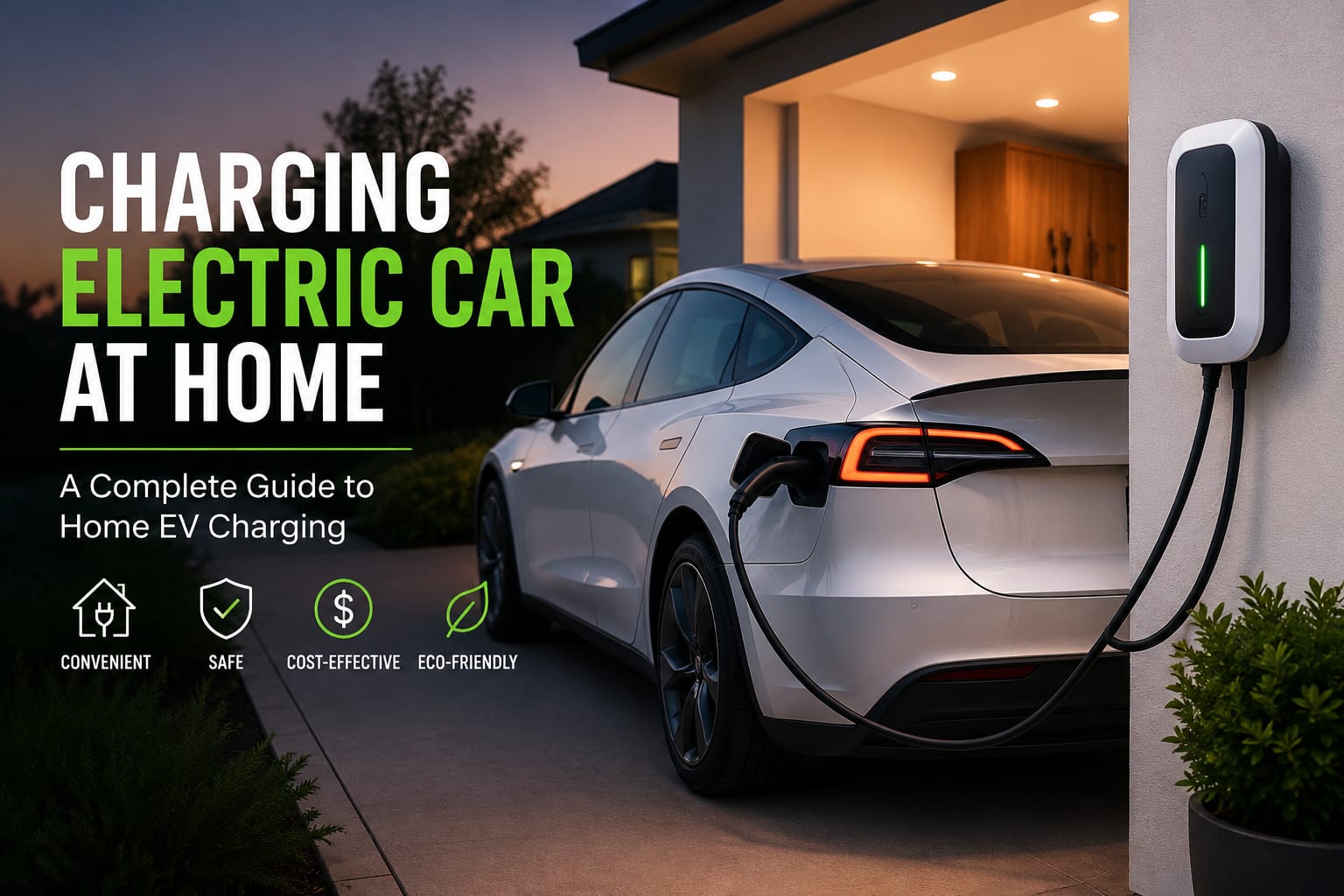
Charging Electric Cars at Home: The Complete Guide
Introduction
Charging electric cars at home is one of the smartest decisions you can make as an EV owner. It saves you money, gives you total control over your electric vehicle benefits, and means you never have to hunt for a public charger again.
But a lot of people feel overwhelmed when they first look into it. Between the different charger types, wiring requirements, and confusing technical terms, it can feel like you need an engineering degree just to plug in your car.
You don’t. This guide breaks everything down in plain language so you can set up a proper charging station setup at home without the headache.
Whether you’re new to EV ownership or just trying to cut your EV running expenses, this article is for you.
Why People Get Confused by Charging Electric Cars at Home
The confusion usually starts with the options. Level 1, Level 2, kilowatt output, ampere output — the jargon piles up fast, and most guides don’t bother explaining it in simple terms.
Then there’s the installation side of things. People hear words like circuit breaker, panel upgrade, and licensed electrician and immediately assume it’s going to be complicated and expensive. Sometimes it is, but often it’s much simpler than people think.
Add in questions about electrical safety, electricity tariff plans, and whether your home’s power setup can even handle a home charging unit, and it’s easy to see why so many EV owners just stick with public chargers longer than they should.
What This Article Will Help You Understand
By the time you finish reading, you’ll know exactly what charging electric cars at home involves from start to finish.
You’ll understand the difference between a standard outlet and a 240V charger, what EVSE installation actually means, and how to figure out what your home needs before you call an electrician.
You’ll also get a clear picture of the real costs, the genuine fuel savings, and how to make your setup as safe and efficient as possible. Let’s get into it.
What Does Charging Electric Cars at Home Mean?
The Simple One-Line Definition
Charging electric cars at home simply means using your home’s household electricity supply to recharge your EV’s battery, either through a basic standard wall socket or a dedicated home charging unit installed in your garage or driveway.
That’s really all it is. You’re using power from your own home instead of paying for it at a public charging outlet.
Does Charging Electric Cars at Home Always Mean the Same Thing?
Not exactly. The phrase covers a pretty wide range of setups. For one person it might mean plugging into a 120V outlet overnight using a basic cable that came with the car. For another it means a professionally installed wall box charger that can fully top up a large battery in a few hours.
Both count as home charging, but the experience is very different. The charge rate, the charge duration, and the overall daily charging routine vary a lot depending on which route you go.
Understanding those differences is what helps you choose the right setup for your lifestyle.
Origin of Charging Electric Cars at Home
Which Platforms Made It Popular?
Home EV charging became a mainstream conversation topic around 2015 to 2018, as brands like Tesla, Nissan, and Chevrolet started releasing affordable electric vehicles to wider audiences.
Online forums, YouTube channels, and EV community sites like Reddit’s r/electric vehicles played a huge role in spreading practical knowledge. Overnight charging tips, off-peak hours strategies, and power grid connection guides became some of the most shared content in those communities.
Social media then picked it up, with EV owners sharing their home setups, comparing monthly charging costs, and discussing energy plan options to get the cheapest rates possible.
Who Uses Charging Electric Cars at Home the Most?
Homeowners with a garage or private driveway use home charging the most, simply because they have a fixed, safe place to install a charging unit. Suburban families, daily commuters, and anyone putting consistent miles on their car tend to find it the most valuable.
Low mileage drivers often manage fine with a basic trickle charge setup. High mileage commuters, on the other hand, quickly realize that a faster recharge option makes their daily life much easier.
As EVs become more common, even apartment dwellers are pushing for building-level residential EV stations, so the user base is growing fast.
Charging Electric Cars at Home vs Similar Charging Options
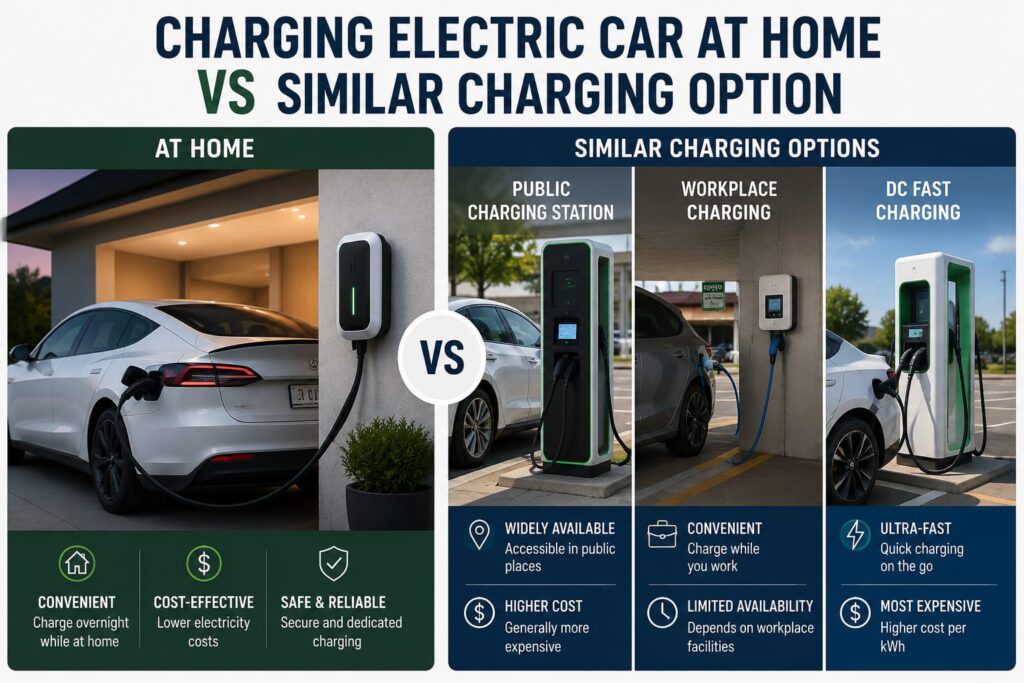
Quick Comparison Table
The table below compares home charging options against public and workplace charging so you can see how they stack up across the key factors that matter most.
| Charging Type | Voltage | Charge Rate | Avg Full Charge Time | Cost Per Session | Best For |
| Level 1 Home | 120V | Slow | 24–50 hours | Very Low | Low mileage drivers |
| Level 2 Home | 240V | Fast | 4–10 hours | Low | Daily commuters |
| Public Level 2 | 240V | Fast | 4–8 hours | Medium | Top-ups on the go |
| DC Fast Charger | 400–800V | Very Fast | 20–60 mins | High | Long distance travel |
| Workplace Charger | 240V | Fast | 4–8 hours | Low/Free | Office commuters |
Key Differences Explained
The biggest difference between Level 1 and Level 2 home charging comes down to kilowatt output and battery capacity demands. A 120V outlet delivers around 1.4kW, while a 240V charger can push 7kW to 11kW or more. That gap translates directly into charge duration.
Public DC fast chargers are faster still, but they’re not meant for daily use. Repeated fast charging can affect battery longevity over time, which is why most EV manufacturers recommend regular home charging as the primary method.
Cost per kWh is also where home charging wins consistently. Even without a special energy plan, home electricity rates tend to beat public charger pricing by a significant margin.
Real Conversation Examples of Charging Electric Cars at Home
Between Friends
“Hey, do you ever worry about running out of charge on your EV?”
“Not really. I do all my charging electric cars at home overnight. Wake up every morning with a full battery. It’s honestly the best part of owning one.”
In a Practical Context
“I’m thinking of getting an EV but I rent a flat. Is home charging even possible for me?”
“Depends on your building. Some places are installing residential EV stations in car parks now. Worth asking your landlord. You could also look into Level 2 portable options.”
In a Group Chat
“Anyone else obsessed with checking their energy dashboard after setting up scheduled charging?”
“Yes! I’ve saved so much on my utility bill since switching to off-peak hours charging. The monthly charging cost has dropped massively.”
“Same. My household energy budget has actually gone down overall even though I’m charging a car.”
Is Charging Electric Cars at Home Rude, Polite, or Practical?
This heading is borrowed from a content framework, but when it comes to the actual practice, let’s talk about when it works well and when it causes issues.
When It Feels Friendly to Your Wallet and Lifestyle
Home charging feels like the ideal solution when you have a predictable routine. You come home, plug in, wake up to a full charge. No queues, no public charger fees, no range anxiety solution needed. The 24/7 charging access fits naturally into daily life.
Using time-of-use scheduling to charge during low tariff hours makes it even better. Some energy suppliers offer specific EV tariffs where nighttime electricity tariff rates drop significantly, turning your vehicle power supply costs into something genuinely minimal.
When It Can Feel Too Forward on Your Electrical System
Problems start when people skip the electrical assessment and just assume their home can handle a new charging load. Old homes with outdated electrical panels and low load capacity can struggle with the added demand.
Installing a hardwired charger without a permit application or without meeting National Electrical Code standards is also a risk. It can void your home insurance and create genuine fire hazard prevention issues.
The answer isn’t to avoid home charging. It’s to get it done properly with a licensed electrician from the start.
How to Respond to Questions About Charging Electric Cars at Home
Simple Replies
When someone asks whether home charging is worth it, the honest answer is almost always yes, with the right setup.
Start by asking how many miles they drive daily. If it’s under 40, even a Level 1 trickle charge setup will likely cover their needs. If it’s more, a Level 2 wall box charger is the clear recommendation.
Point them toward their energy supplier to check available EV tariffs, and suggest they get a quote from a licensed electrician to understand real installation cost before assuming it’s out of budget.
Playful Replies
“Is it weird that I actually look forward to plugging in my car every night?”
Not at all. The daily charging routine becomes genuinely satisfying once you realize what it’s replacing. No more petrol stations, no more fuel cost stress, no more checking prices before you fill up. Just plug in, go to bed, done.
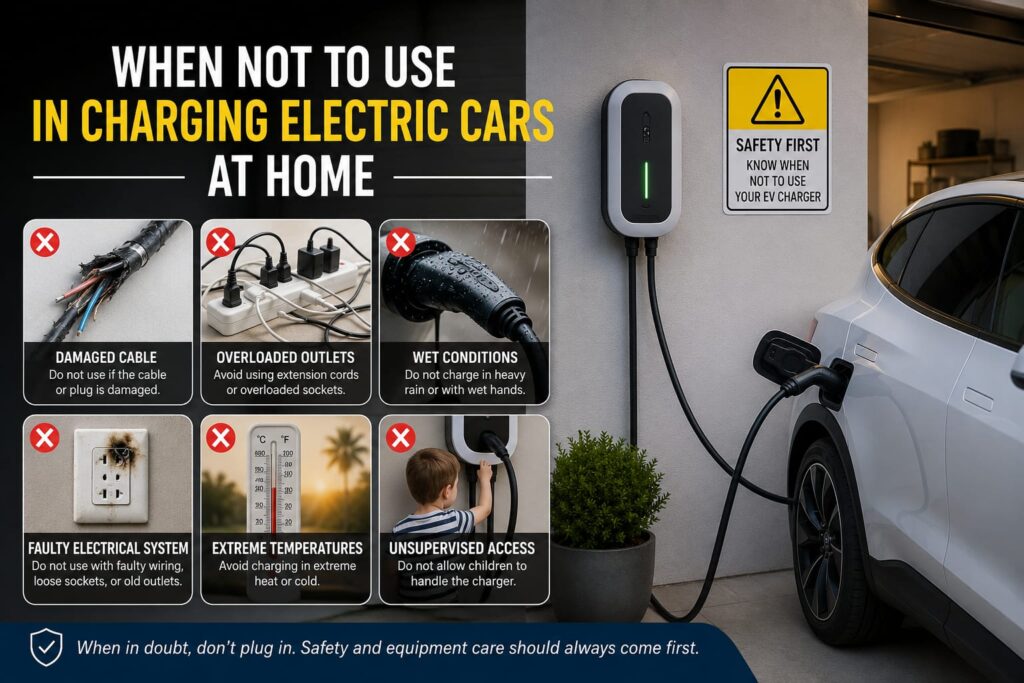
When NOT to Use Charging Electric Cars at Home
Home charging isn’t the right move in every situation. If you’re renting and your landlord won’t allow EVSE installation, pushing ahead anyway is a bad idea legally and practically.
If your home has serious electrical panel limitations and a full panel upgrade isn’t affordable right now, you might be better off relying on public charging temporarily while you save up for a proper setup.
Also avoid home charging with non-UL certified charger equipment, non-approved extension leads, or in locations without weatherproof outlet protection. GFCI protection isn’t optional — it’s a basic electrical safety requirement that keeps you safe from overheating risk and worse.
FAQ
What is the cheapest way to charge an electric car at home?
The cheapest method is using a Level 2 charger combined with a peak vs off-peak rate energy plan. Charging during nighttime low tariff hours can reduce your cost per kWh significantly and lower your overall monthly charging cost.
Do I need a professional to install a home EV charger?
Yes, for Level 2 setups you’ll need a licensed electrician to handle the dedicated circuit, wiring gauge, and ground fault protection. It ensures your install meets National Electrical Code standards and keeps your home insurance valid.
How long does it take to fully charge an EV at home?
It depends on your charger type and battery capacity. A Level 1 120V outlet can take 24 to 50 hours for a full charge. A Level 2 240V charger typically does the job in 4 to 10 hours, making it the preferred home charging unit for most drivers.
Will home EV charging increase my electricity bill significantly?
Your electricity usage will go up, but your fuel cost goes down. Most EV owners find the EV vs petrol cost comparison strongly favors home charging. A proper energy audit and off-peak plan keeps the utility bill impact manageable.
Is it safe to charge an EV at home overnight?
Yes, when done correctly. Use a UL certified charger, ensure GFCI protection is in place, avoid cable wear by checking connections regularly, and never use an indoor charging outlet without proper surge protection. Modern smart charger units also include built-in safe plug-in practices and auto-shutoff features.
If you found this guide useful, you might also enjoy reading about how to choose the best EV tariff from your energy supplier — it covers everything from smart grid integration to demand response plans that can cut your home energy management costs even further.
Conclusion
Charging electric cars at home is one of the most practical upgrades that comes with switching to an electric vehicle. Once your home charging solution is set up properly, the benefits are immediate — lower energy cost, better battery management, genuine long-term savings, and the kind of daily charging routine that just becomes second nature.
The key is doing it right from the start. Choose the correct charger options for your needs, get a proper electrical assessment, follow safety practices, and take advantage of any EV incentives or rebate programs available in your area.
With the right EV infrastructure in place, charging electric cars at home stops being a chore and becomes one of the best parts of sustainable driving. Your car is always ready, your costs stay low, and your EV lifestyle integration is complete.





3 Comments