Copy That vs Roger That: What’s the Difference and When Should You Use Each?
If you’ve ever gotten a text that just says “copy that” or “roger that,” you’ve probably paused for a second. Are they the same thing? Does one mean more than the other? Copy That vs Roger That is one of those phrase pairs that sounds simple until you actually try to explain it.
Both terms started in radio communication terms and have slowly crept into everyday texting, gaming chats, and even flirty banter. But they don’t always mean the exact same thing, and using them the wrong way can make a message feel off.
This article breaks it all down in plain language, no jargon overload.
Why People Get Confused by Copy That vs Roger That
The confusion mostly comes from pop culture. Movies and shows use both terms interchangeably, so most people assume they’re identical twins.
In reality, one is about message received and understood, while the other leans more toward simple acknowledgment. That small gap matters more than people think, especially in police radio codes and pilot tower communication.
What This Article Will Help You Understand
By the end, you’ll know exactly when to use each phrase, how they showed up in military jargon and aviation communication phrases, and how they’ve been repurposed for Gen Z slang and modern texting.
You’ll also get real text examples, a quick comparison table, and tips on replying if someone sends you one of these phrases out of nowhere.
What Does Copy That vs Roger That Mean in Text?
The Simple One-Line Definition
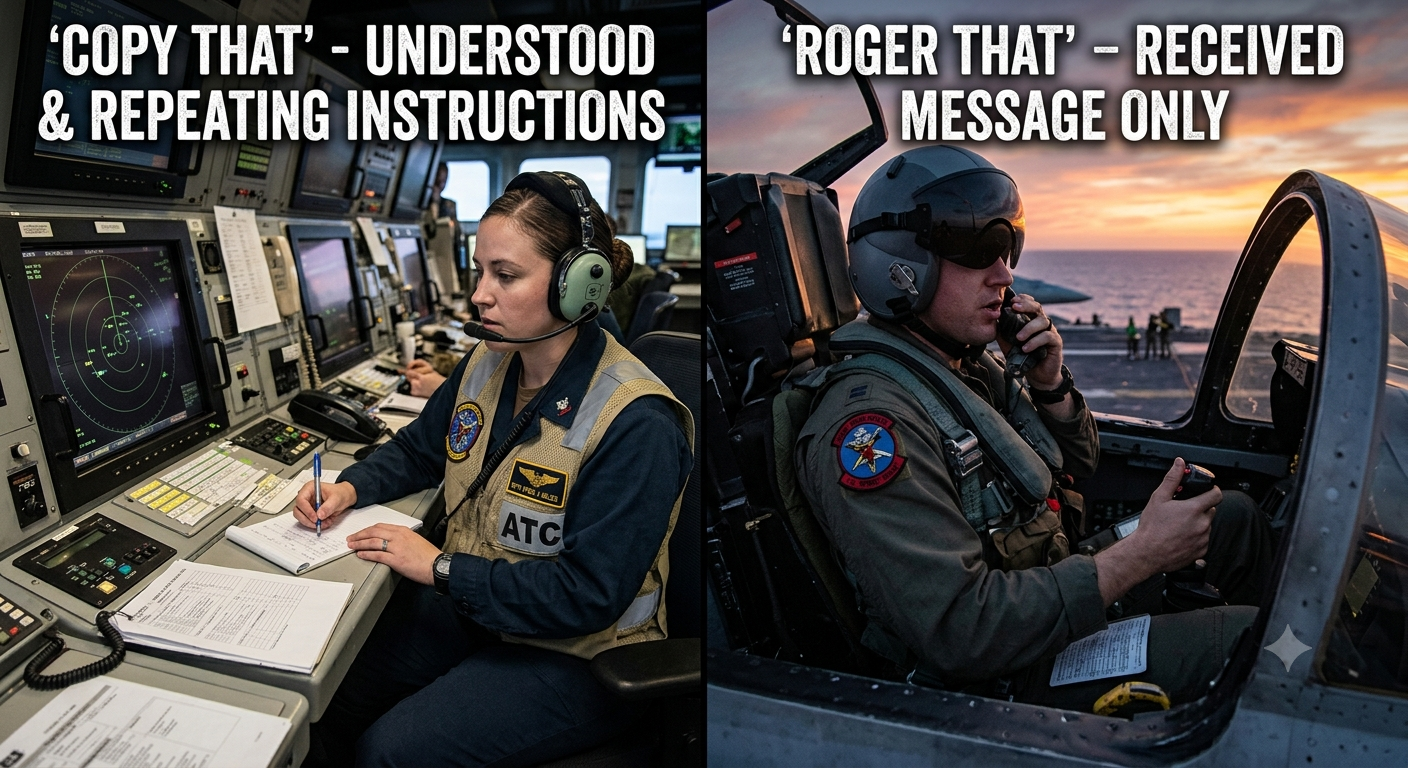
“Copy that” basically means “I heard you and I understand,” while “roger that” traditionally just confirms “message received,” without necessarily agreeing to act on it.
In texting, though, both usually just mean “got it” or “okay, noted.”
Does Copy That vs Roger That Always Mean the Same Thing?
Not exactly. In casual digital communication, people use them as near-synonyms. But in formal settings like emergency services communication or two-way radio language, the distinction still holds.
“Roger” only confirms you heard the message. It doesn’t promise action. “Wilco” (short for “will comply”) is the term that actually means you’ll do what was asked, which is why Wilco meaning often gets mixed up with roger that meaning in casual conversation.
Origin of [Copy That vs Roger That] Slang
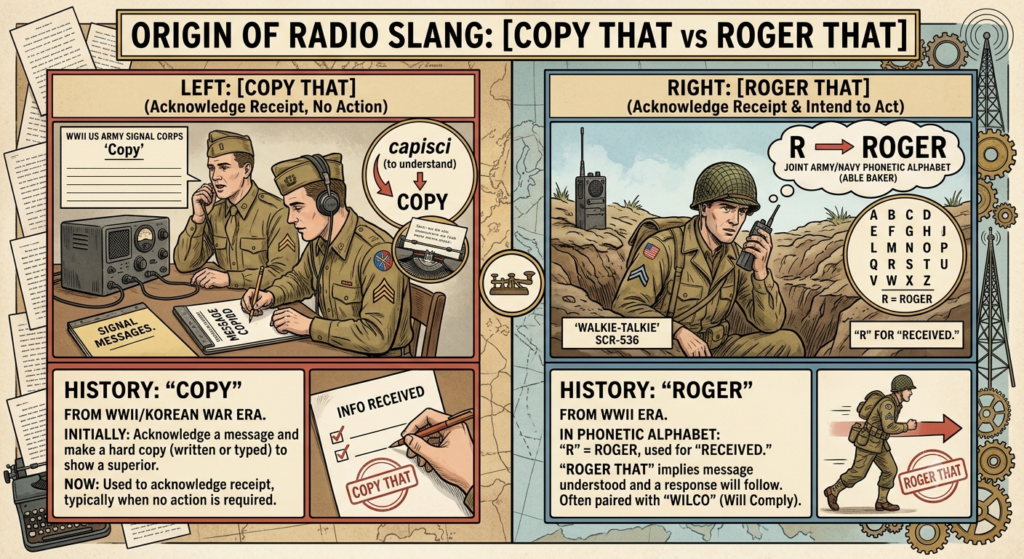
Both phrases trace back to early radio protocol and telegraph Morse code communication, long before texting existed.
“Roger” comes from the old NATO phonetic alphabet, where “R” stood for “Roger” and represented “received.” Once radio operators adopted it, phonetic alphabet Roger became shorthand for confirming a transmission came through clearly.
“Copy that” grew out of similar radio culture, especially in command and control communication, where operators needed a fast way to confirm they’d copied down information correctly.
Which Platforms Made It Popular?
Military radio use is the obvious starting point, but pop culture pushed these phrases into mainstream vocabulary. Think Top Gun Die Hard quotes, war movies, cop shows, and flight simulators.
Video games with voice chat also helped a lot. Multiplayer shooters and military-style games use both terms constantly, which is part of why younger audiences picked them up so fast.
Who Uses Copy That vs Roger That the Most?
Pilots, dispatchers, police officers, and military personnel still use these terms daily as part of standard radio etiquette. Outside of that, gamers, walkie-talkie hobbyists, and people who just think the phrases sound cool keep them alive in everyday speech.
Group chats, Discord servers, and even WhatsApp chat words culture have turned both terms into a fun way to sound confident or a little dramatic when confirming plans.
Copy That vs Roger That vs Similar Slang Terms
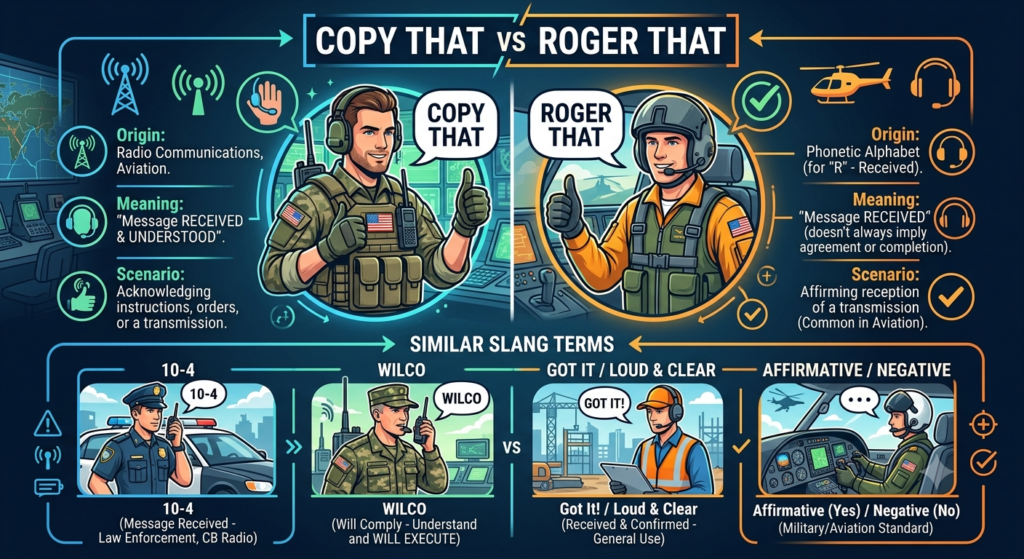
There’s a whole family of radio-inspired phrases people mix up constantly. Knowing the small differences helps you sound like you actually know what you’re saying.
Quick Comparison Table
Here’s a quick table showing how these terms compare in meaning and typical usage.
| Term | Original Meaning | Common Texting Meaning | Typical Setting |
|---|---|---|---|
| Copy that | Message received and understood | Got it, okay | Casual texting, gaming |
| Roger that | Message received (no action implied) | Got it, sounds good | Formal or playful contexts |
| Wilco | Will comply with the request | I’ll do it | Military, structured plans |
| Over and out | Ending the transmission | Talk soon, done for now | Ending a chat casually |
| Say again | Repeat the message | Say that again / what? | Clarifying confusion |
Key Differences Explained
The biggest difference is intent. “Copy that” leans toward understanding the content of a message. “Roger that” leans toward simply confirming receipt.
“Say again” is used when something wasn’t clear, which is why the say again radio term shows up so often in noisy environments like aviation or emergency calls. “Over and out” phrase, on the other hand, signals the conversation is finished, which is very different from either acknowledgment phrase.
Real Conversation Examples of Copy That vs Roger That
Seeing these phrases in actual texts makes the tone way easier to understand.
Between Friends
Friend 1: “Meet at 7 outside the theater.” Friend 2: “Copy that, see you then.”
This feels casual and friendly, almost like a joke about sounding official.
In a Flirty Context
Person 1: “Wear something cute tonight 😉” Person 2: “Roger that, captain.”
Here it adds a playful, teasing vibe. It’s less about message acknowledgment and more about flirting through humor.
In a Group Chat
Organizer: “Everyone bring snacks, no repeats.” Member: “Copy that.” Another member: “Roger, bringing chips.”
In group settings, both terms work as quick, low-effort replies that keep the conversation moving without long explanations.
Is Copy That vs Roger That Rude, Polite, or Flirty?
Context decides everything here. Tone matters more than the words themselves.
When It Feels Friendly
Used casually, both phrases feel upbeat and easygoing. They’re quick, clear, and often used with a laughing emoji or a lighthearted follow-up message, making them feel more playful than formal.
When It Can Feel Too Forward
If someone uses either term in a serious or emotional conversation, it can come across as dismissive. Saying “roger that” after someone shares something personal might feel cold instead of confirming.
Timing and relationship closeness usually decide whether it lands as fun or careless.
How to Respond to Copy That vs Roger That
Replying doesn’t need to be complicated. Matching the tone of the original message usually works best.
Simple Replies
“Got it.” “Sounds good.” “Okay, noted.”
These keep things straightforward without overthinking the response.
Playful Replies
“Roger that, captain 🫡” “Copy that, over and out.” “10-4, good buddy.”
These work great in casual chats, especially with friends who enjoy a little banter.
When NOT to Use Copy That vs Roger That
Avoid using either phrase in serious emotional conversations, professional emails, or moments where someone needs empathy instead of a quick confirmation. It can feel dismissive when warmth is expected instead of efficiency.
Job interviews, formal customer service chats, or condolence messages are also situations where these terms feel out of place. Save them for casual, lighthearted exchanges instead.
FAQ
What does copy that mean in texting?
It usually means “I understand” or “got it.” It shows you received and processed the message clearly.
What does roger that mean in texting?
It typically means “message received,” similar to a casual “okay” or “noted,” without necessarily agreeing to act on it.
Is roger that police or military slang?
Both. It originated in military radio terms and later became common in police radio codes and other emergency services communication.
Can I use copy that and roger that interchangeably?
In everyday texting, yes, most people treat them as basically the same. In formal radio settings, small differences in meaning still apply.
Why do people still use these old radio phrases?
Pop culture, gaming, and radio brevity and clarity habits keep these phrases alive. They’re short, familiar, and add a fun tone to casual chats.
Conclusion
At the end of the day, Copy That vs Roger That comes down to tone more than strict rules. Both phrases started in serious radio communication, but they’ve evolved into fun, flexible expressions people use in texts, group chats, and playful banter.
Understanding where they came from just makes it easier to use them the right way, whether you’re confirming plans or just joking around with friends.
If you enjoyed this breakdown, you might also like reading about other radio-inspired texting slang, like the difference between “10-4” and “affirmative,” which follows a similar pattern of old-school communication meeting modern messaging habits.